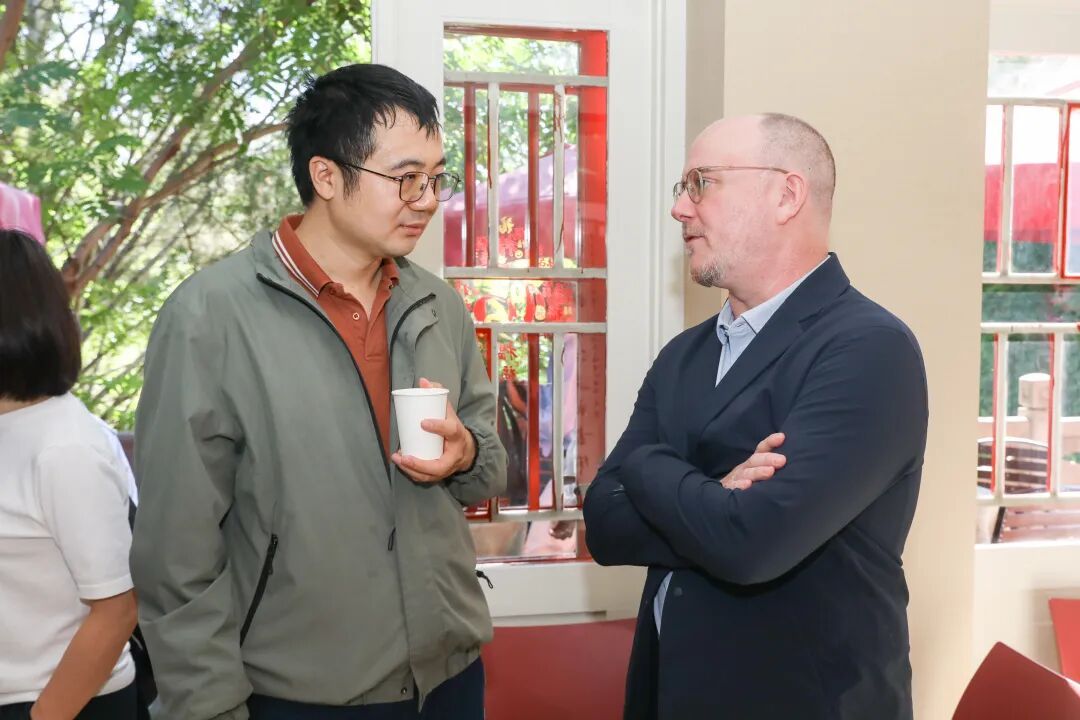
On June 6, the 2026 YCA Faculty Symposium was held at Jingyuan Courtyard 3. Over 20 teaching faculty members and dissertation supervisors from within and outside Peking University attended the meeting, joined by Dean Dong Qiang, Associate Deans Fan Shiming and Brent Haas, Director of Graduate Studies Lu Yang, and Assistant Dean Cheng Changwei. The meeting was hosted by Associate Dean Fan Shiming.
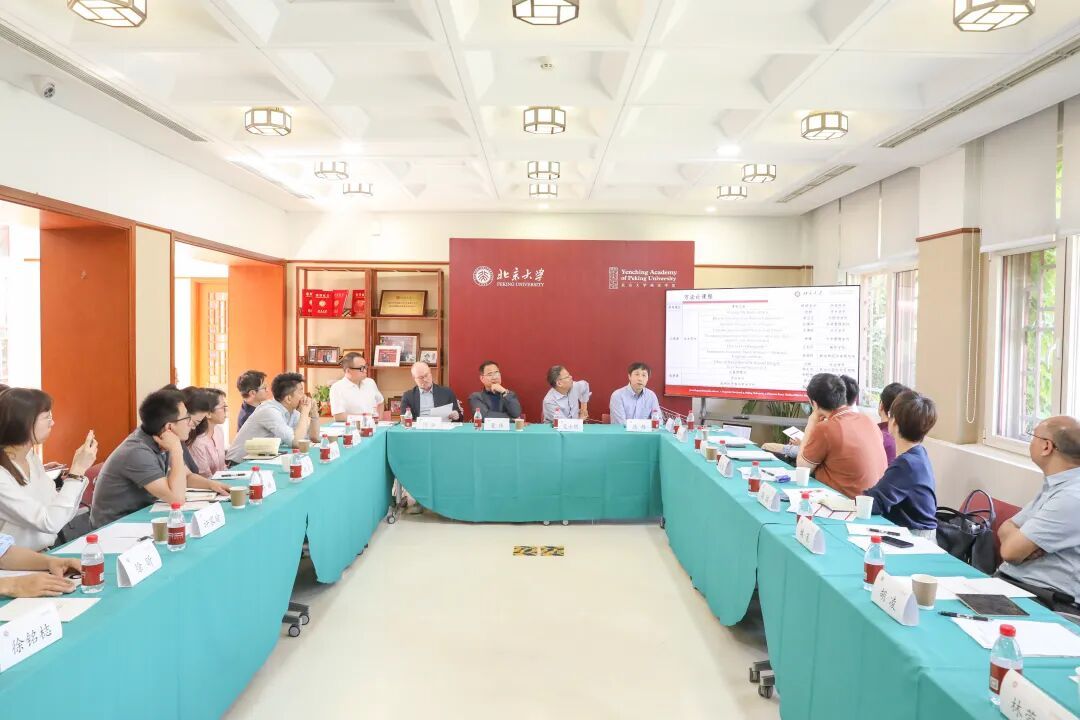
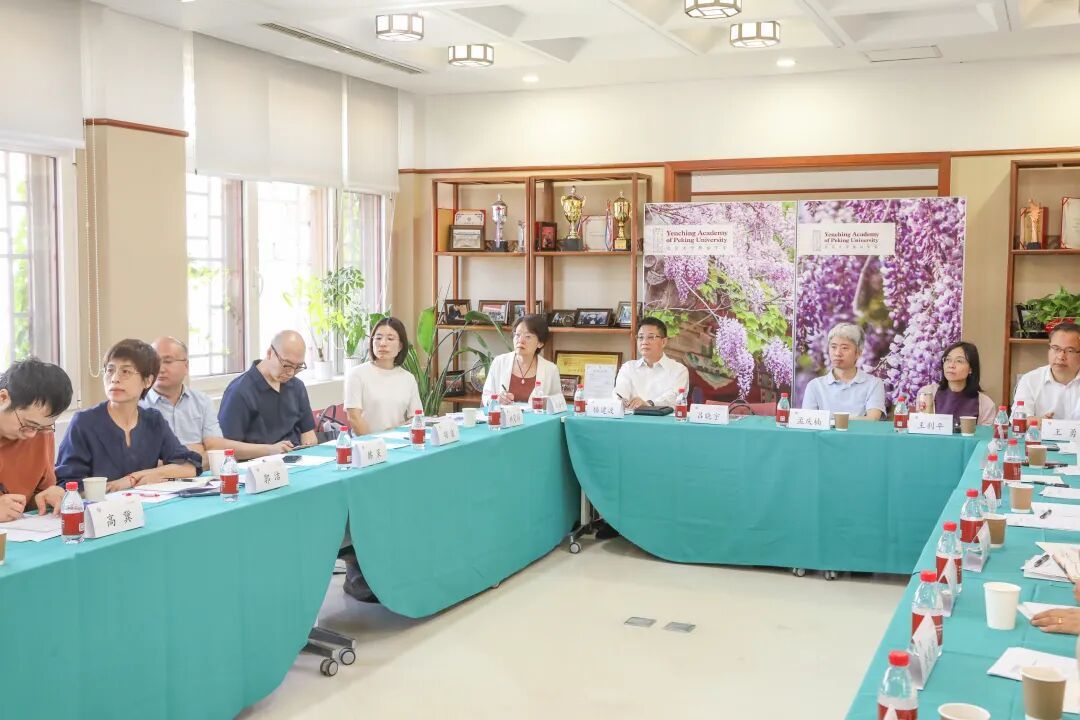
Associate Dean Fan Shiming pointed out that the symposium served as a periodic review of the Academy’s work, to gather both frontline teaching and management experience and emerging problems to be addressed. The symposium has effectively advanced the Academy’s educational model and talent development. Fan noted that the Academy appreciates advice and suggestions from its teaching faculty and dissertation supervisors. He also acknowledged the presence of administrative staff. Fan hoped that ideas would be pooled together for YCA’s sustained development in the future.

Dean Dong Qiang delivered welcome remarks on behalf of the Academy. He noted that the annual faculty symposium is one of his most anticipated events; it is academically important to the Academy and bolsters the Academy’s community of faculty and staff. By leveraging PKU’s rich legacy of humanities and social sciences, Yenching Academy provides the English-taught master’s program in China Studies and is a flagship institution of international education known for its distinct educational model. Throughout the 12 years since the founding of YCA, the Academy’s faculty and staff have worked in concert, developing a competitive program that attracts young talents from top universities all around the world and building YCA’s signature system of international education. Dean Dong appreciated the efforts from every member of the faculty and staff for the Academy’s development and achievement. He further stressed new developments in internationalised education, emerging alongside the opportunities and challenges of the AI era. Dong hoped that our teachers would delve into problems they encountered in teaching, and by drawing upon their expertise, give their advice on the Academy’s educational model and talent development.

Associate Dean Brent Haas gave a brief review of the Academy’s admissions. The Academy has enrolled 11 cohorts, totalling 1,183 scholars from 89 countries and regions. Approximately 15% of them hold a master’s degree. He focused on Cohort 2025 and Cohort 2026. Seven scholars from Cohort 2025 are Cambridge graduates, placing the University of Cambridge at the top of the enrollment list. The University of Oxford tops YCA’s enrollment list of 2026, with eight of its alumni admitted. YCA will enrol more from Africa, Latin America, and Central and Eastern Europe. Haas hoped that through the home institutions of its teaching faculty, such as the PKU Centre for African Studies, Yenching Academy could expand the channel for its admissions information sessions.

Lu Yang, Director of Graduate Studies, introduced the Academy’s curriculum design and course content. A Yenching Scholar is required to take at least two elective courses within his/her own research area (track). If a Scholar applies for the change of research area (track), he/she must fulfil the requirements of the original track before taking the other two elective courses within the proposed track. Over the years, the Academy has kept making productive explorations in curricula design. With a newly added methodology course, the Scholars-centered curriculum integrates social sciences and humanities, as well as qualitative and quantitative studies. Course feedback indicates that an overwhelming majority of our Scholars prefer a participatory classroom. The application of AI raises fairness concerns, but there are hardly any reliable criteria in place. Therefore, Prof Lu hoped that our teachers could explore how to guide students in properly using AI.

Assistant Dean Chen Changwei talked about dissertation writing, including the Academy’s dissertation supervisors. The Academy boasts an alumni community of nearly 1,000 members. Its 162 dissertation supervisors come from 25 schools, departments, institutes, and centres of Peking University. Supervision approaches for Yenching Scholars’ dissertation writing may differ from those in supervisors’ home institutions. Chen hoped that Yenching Scholars might be incorporated into the educational models of supervisors’ home institutions and allowed to participate in academic events there. In previous track-transfer cases, some applicants had insufficient theoretical grounding for their proposed tracks. Assistant Dean Chen thus hoped that the teaching faculty would help evaluate whether an applicant is qualified for a track transfer. The pilot track-transfer proposal presentation for Cohort 2024 proved to be a success. Drawing on the pilot’s experience, YCA will formalise the proposal presentation process. The proposal presentation is crucial to the overall performance of the dissertation, and the teaching faculty’s contribution is highly appreciated.

Gao Ji, Associate Professor (with tenure) of the Department of Chinese Language & Literature/Institute of Comparative Literature & Comparative Culture, Peking University, regarded the cross-departmental teaching as a thought-provoking practice. In his day-to-day instructions, Gao tries to put Yenching Scholars and the Chinese majors on equal footing, inviting them all to reading sessions and face-to-face meetings. But he also acknowledged the differences in the program’s duration, curriculum, and objectives between YCA and his home institute. Gao noted that the instruction would be less effective if a Yenching Scholar’s research area were not compatible with the dissertation supervisor’s academic expertise. He suggested that the proposal presentation and other key milestones be formalised for Yenching Scholars, so that Yenching Scholars and students from the instructor’s home institute would see their academic objectives more aligned.
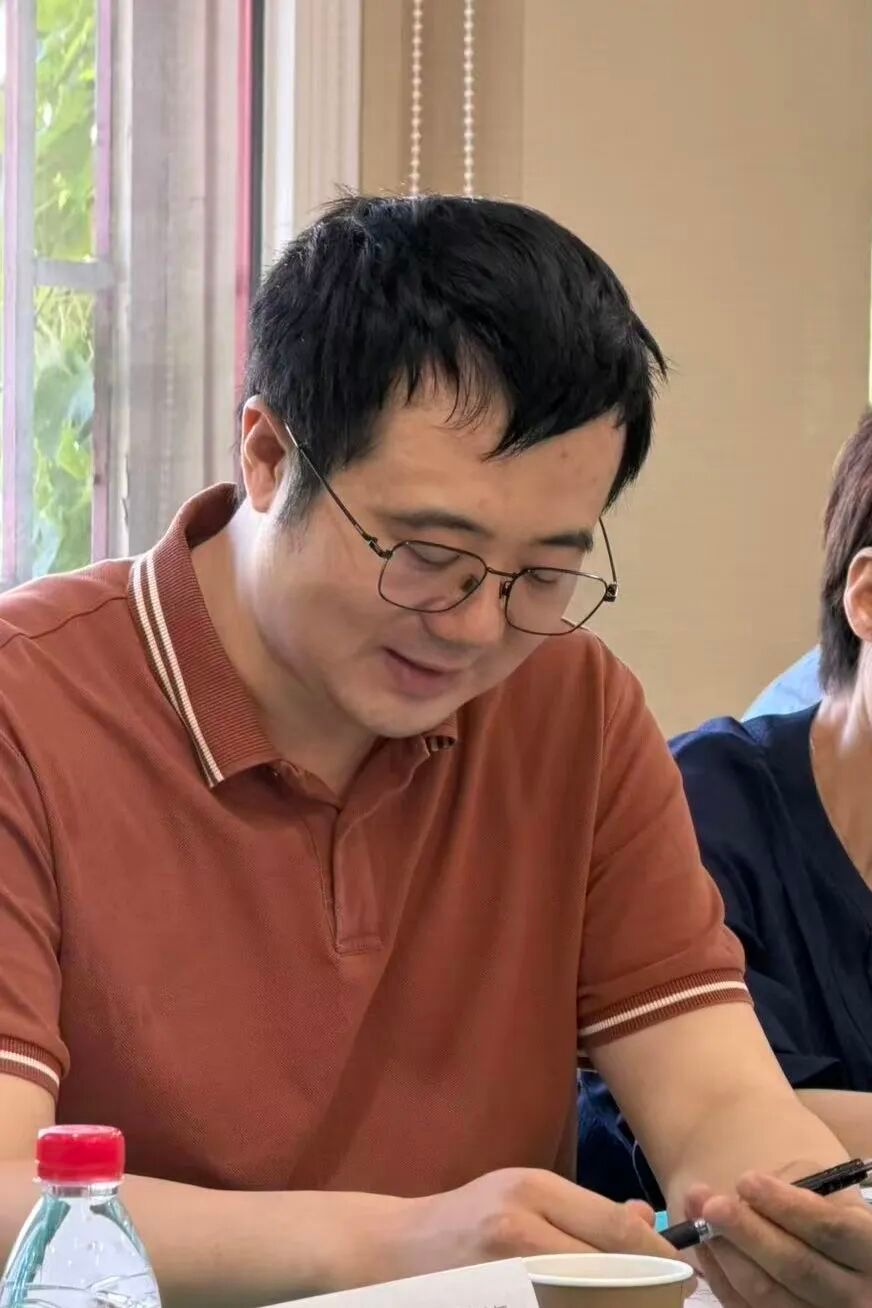
Lou Jianbo, Professor of the Law School, Peking University, shed light on approaches to different student groups. He pointed out that he teaches with different approaches at Yenching Academy and at the School of Law, because the student compositions differ and the students have different needs. Prof Lou has adapted his teaching approach to YCA’s program, asking every Yenching Scholar in his class to complete one research project by leveraging their strengths. In his class, Prof Lou has engaged students through questioning. Lou Jianpo has thought highly of Yenching Scholars and valued YCA’s program as being like a magnet attracting many capable teachers of Peking University. He expressed his good wishes for the Academy’s promising future.

Wu Lijuan, Associate Professor of the PKU Department of Sociology, reviewed her role in YCA’s field research. She encourages students to take part in the interdisciplinary field study under “China in Transition”, regarding it as an exemplar of interdisciplinary education. Wu adopts an architectural yet egalitarian approach, prioritising students’ contributions. She readjusted her class objectives, considering international students’ Chinese language skills and the resulting inadequacy of their field surveys. By following the Academy’s schedule, she has held meetings with her YCA students every two weeks, clarifying the study tasks. Throughout her teaching career, Wu has adhered to rigorous academic standards while accommodating students’ unique traits.

Liu Haifang, Associate Professor of the PKU School of International Studies, serves as Director of the Centre for African Studies, Peking University, and Director of the Institute of Afro-Asian Studies. At the symposium, she shed light on topics from admissions and selection, the educational mechanism, track transfer policies to field trips. She has valued the unique role of YCA’s interdisciplinary China Studies program in the global academic ecosystem and is willing to recruit more Global South students for the Academy, by leveraging her experience and resources in African Studies. For recruitment, she found it advisable to align admissions criteria with graduate outcomes. That is, in its recruitment, YCA may take into consideration students’ plasticity and post-training prospects, from the academic perspective of the Academy’s interdisciplinary China Studies program. Liu suggested that in-program and post-program evaluations be integrated into admissions indicators, so that academic resources are channelled more to those who need them most. From her personal experience with major transfer applicants, Liu thought it natural for students to have such demands, because they may discover wider academic interests during their studies and want to take a different major or track. Furthermore, she supported a formalised proposal presentation process, which serves as an institutionalised norm for the students. Liu valued the Academy’s interdisciplinary program as a platform for both teachers and students and found its in-class survey mechanism invaluable. She believed that the Academy and its China Studies program will achieve more with support from around the University.

Guo Jie, Associate Professor of the PKU School of International Studies, has witnessed the Academy’s development all these years, including greater diversity and the increasingly higher quality of its student population. Drawing upon her academic expertise, Guo analysed the characteristics of YCA’s Latin American students and the composition of their sources, followed by advice on student recruitment and cultivation. She introduced the tiered and type-specific norms adopted by European and American universities and colleges to address the increasing challenges Generative AI poses to teaching. Guo also shared her insights on the issue based on observations and communication in her daily teaching.

Meng Qingnan, Associate Professor (with tenure) of the PKU Department of Philosophy and Religious Studies, focused on the features of his course and the student performance in his class. Based upon the course, Meng hoped to see students break down barriers and delve into the Confucian classics to understand ancient Chinese philosophy and pathways. He preferred students to “empty the mind” not only for the literal meaning, but also for critical thinking, so as to enhance their academic capabilities and get prepared for their future academic and career development. He appreciated the students’ wise use of AI: With AI, they have gained greater efficiency by using reliable sources to locate books, videos and images.

Yang Feng, Assistant Professor at the Centre for Social Research, Guanghua School of Management, Peking University, focused on students’ engagement with AI tools. With AI tools, students either navigated their many research interests and located a focused project topic or pooled mass data to facilitate a quantitative study. Yang suggested that AI and its usage be discussed in class, bringing to students’ attention AI’s limitations and shedding light on scenario-based selection of research methods.

Zhou Yi, Associate Professor (with tenure) at the Centre for Social Research, Guanghua School of Management, Peking University, noted that the Academy’s master’s program has become increasingly prestigious. He shared the experience in organising proposal presentations and group meetings and providing necessary guidance to advance students’ research projects. Zhou also introduced how to use AI tools to facilitate daily work, and gave opinions on AI’s impact on an assessment system and its underlying logic and targeted training.

Zha Xiaoyan, Professor of the Department of Russian Language and Literature, PKU School of Foreign Languages, recalled her latest discussion with students about their dissertations. She found it necessary to establish a formal system for the proposal presentation, because a student could receive diverse feedback from multiple instructors through the proposal presentation, thus being exposed to valuable insights. Prof Zha suggested that YCA hold admissions outreach in Russia by leveraging PKU resources and alumni support.

Xu Xin, Program Manager for the Levinson Program in China and Asia-Pacific Studies at Cornell University, is an instructor for China in Transition at Yenching Academy and is impressed by the Academy’s ever-improving curriculum design for its China Studies program. As Xu noted, this interdisciplinary course is a successful design by instructors from diverse academic backgrounds and explores topics concerning modernity, sustainability, and humanism. The instructors tailored their teaching to the Academy’s culturally and academically diverse student body, who in turn have helped shape the course. Instructors from diverse academic backgrounds have incorporated their own expertise into the China in Transition framework. Xu suggested that the China in Transition course incorporate discussions on the disruptive challenges posed by AI to China and the world.

Dean Dong Qiang delivered the concluding remarks for the substantive symposium. He appreciated the wide array of topics, from students’ varied levels of Chinese proficiency and academic preparedness, field research, proposal presentation, to new developments in the AI era. He promised that the Academy will act on these pieces of advice and suggestions. He urged everyone to see the values and significance of the Yenching Academy. As a flagship institute of Peking University, YCA has developed its master’s program in China Studies into a world-renowned one, that is rooted in Chinese culture and takes on global perspectives. Peking University aims to be among the top-ranked world-class universities by 2030. Yenching Academy always feels the burden on its shoulders, as a PKU flagship institute of international education and exchanges. Dong acknowledged the difficulties the Academy has met and will meet, while being confident of its promising future with the full support of PKU. He appreciated every instructor’s efforts—it is challenging to accommodate a mix of students within the Academy’s English-taught curriculum without compromising rigorous academic standards. The dean called for concerted efforts for the Academy’s steady progress in the future.