On the evening of November 1, the audience surrendered to the magic of music at B101 in the PKU Second Gymnasium, immersing themselves in the lecture and performance by Yves Henry and meeting Chopin across the span of time and space at Chopin Night at Yenching Academy. Maestro Yves Henry is an Officer of the French Order of Arts and Letters, Professor at the Conservatoire National Supérieur de Musique et de Danse de Paris (CNSMDP), President of the Festival Chopin à Nohant, and a member of the Board of the International Federation of Chopin Societies.
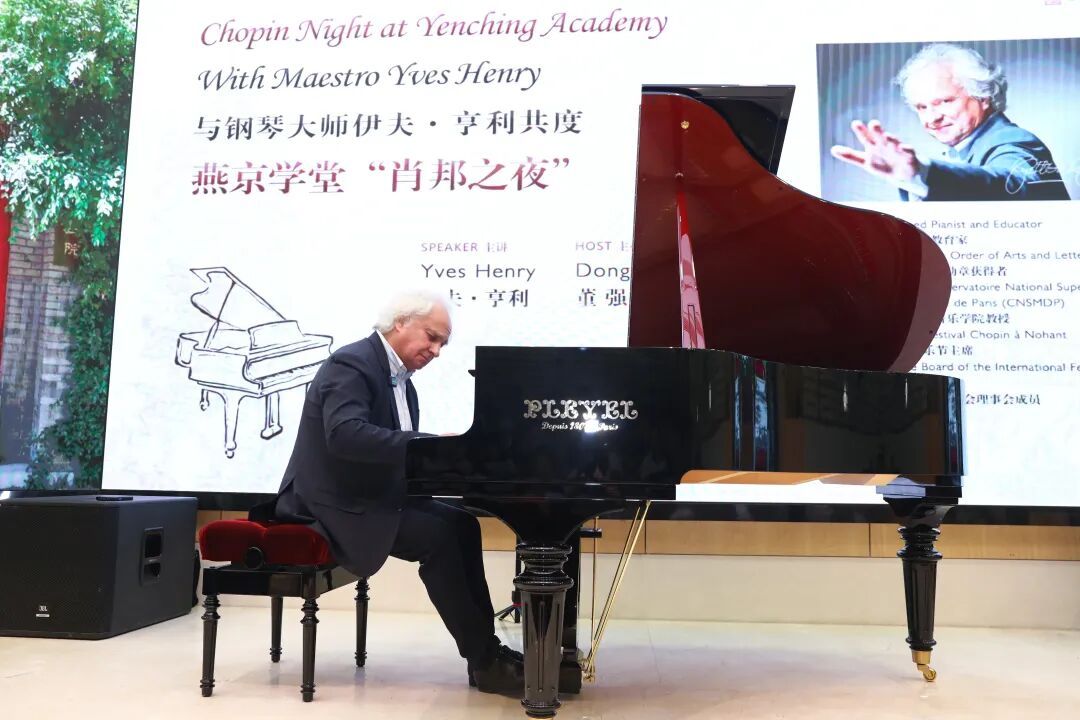
Prof Dong Qiang, Dean of Yenching Academy and host of the music event, extended a warm welcome to Prof Henry. Prof Dong believed that the audience would have a fantastic Chopin Night, where Prof Henry was going to tell the story of Chopin’s life and present the great composer’s Romantic masterpieces.
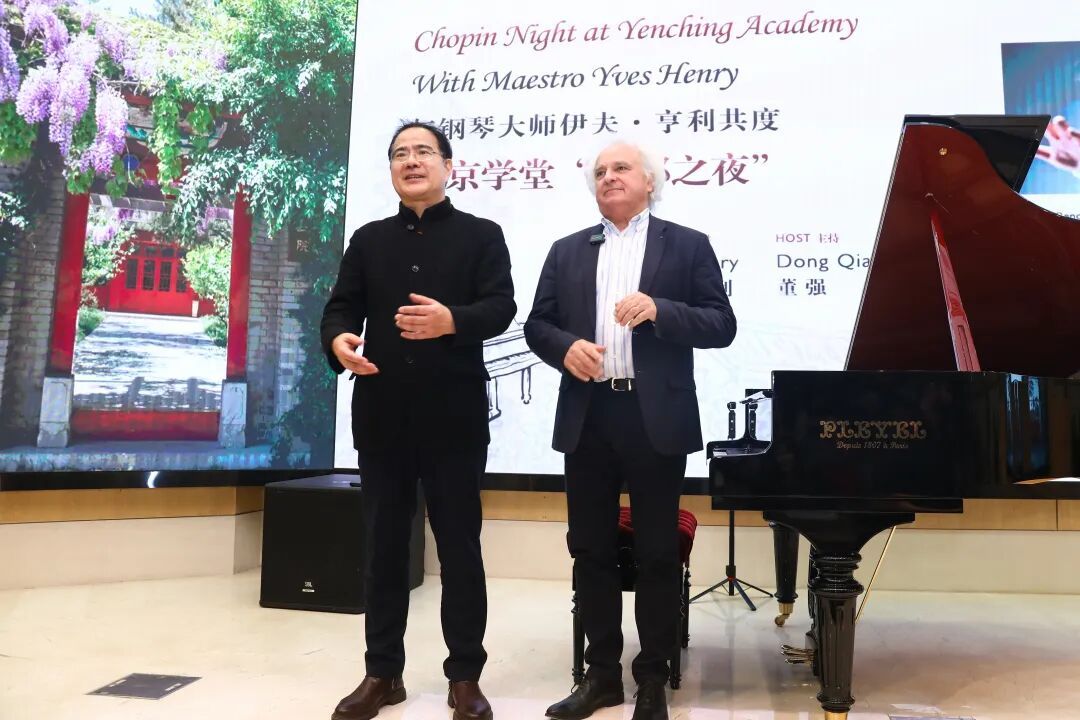
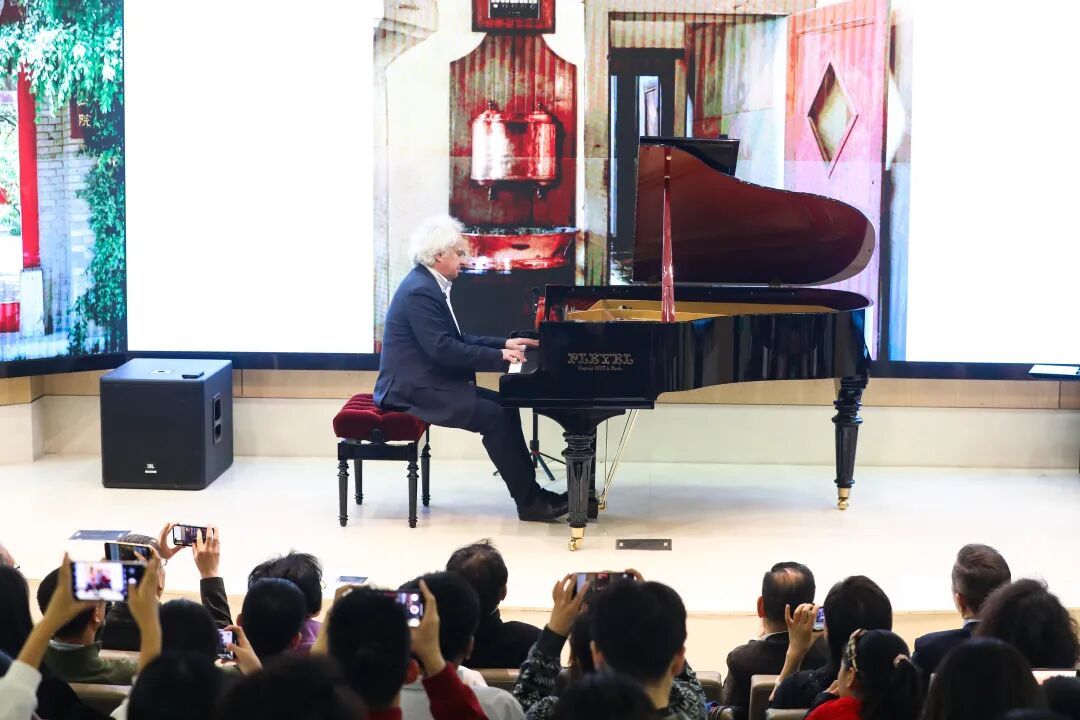
Prof Yves Henry outlined Chopin’s undulating life. Frédéric Chopin (1810‒1849) was born to a Polish mother and a French father and naturally carried both cultures throughout his life. Born in Warsaw, Poland, the Polish composer spent the first half of his life in Poland and was exiled to Paris at the age of 20 when the Polish revolt against Russian rule broke out. He settled in the French capital and lived there until his death. The short-lived composer left a rich legacy of music to the world. Chopin enjoyed a tranquil life in Paris and reached his golden period of composition, creating monumental works. Prof Henry noted that music speaks where words end and that Chopin wove his life experiences into his works. Prof Henry had hardly finished his remarks when the exuberant tune of Waltz in E-flat Major, Op. 18, “Grande Valse Brilliante”, resounded in the lecture hall.
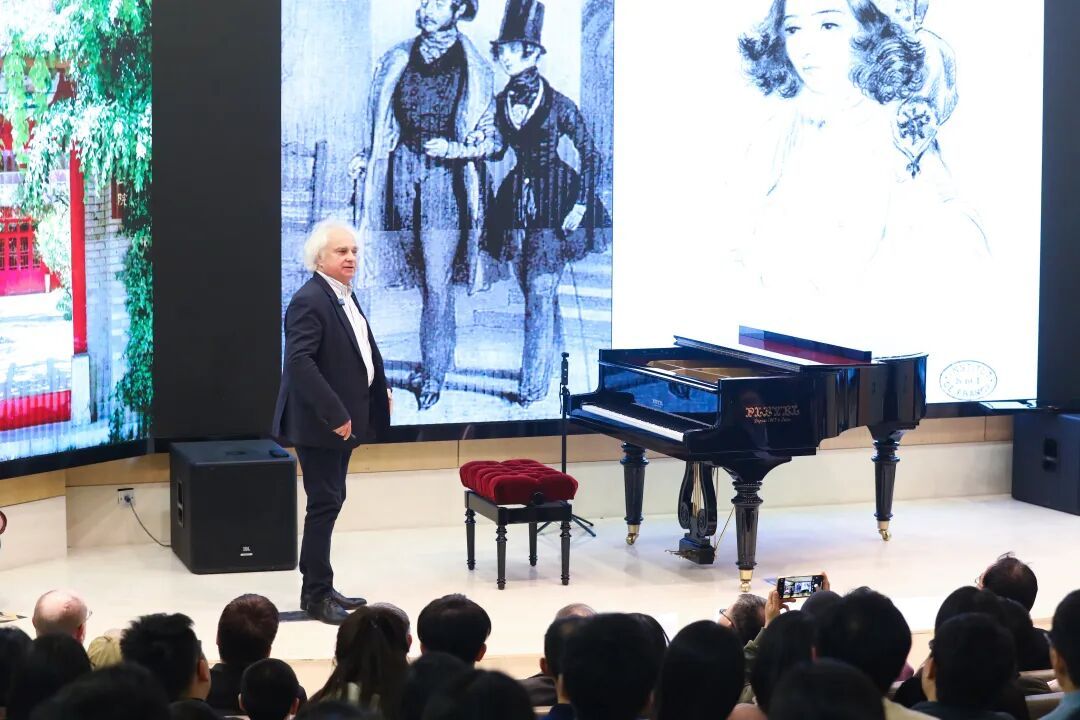
With the buoyant tune lingering in the air, Prof Henry turned to Chopin’s country life in central France. The professor brought those remote days of the 19th century to life with images. The village where Chopin lived remains much as it was in Chopin’s times. Every April to November, it is pleasant at Nohant. Chopin lived at peace and ease and composed a succession of works there. In the images, George Sand was clad in men’s clothing. Prof Henry noted that Sand’s cross-dressing was her way to break gender barriers and to allow her to be more socially mobile in the male-dominated literary circle. The village estate was Sand’s family estate at Nohant. Like the Franc0-Polish composer, George Sand was descended from French and Polish sources.
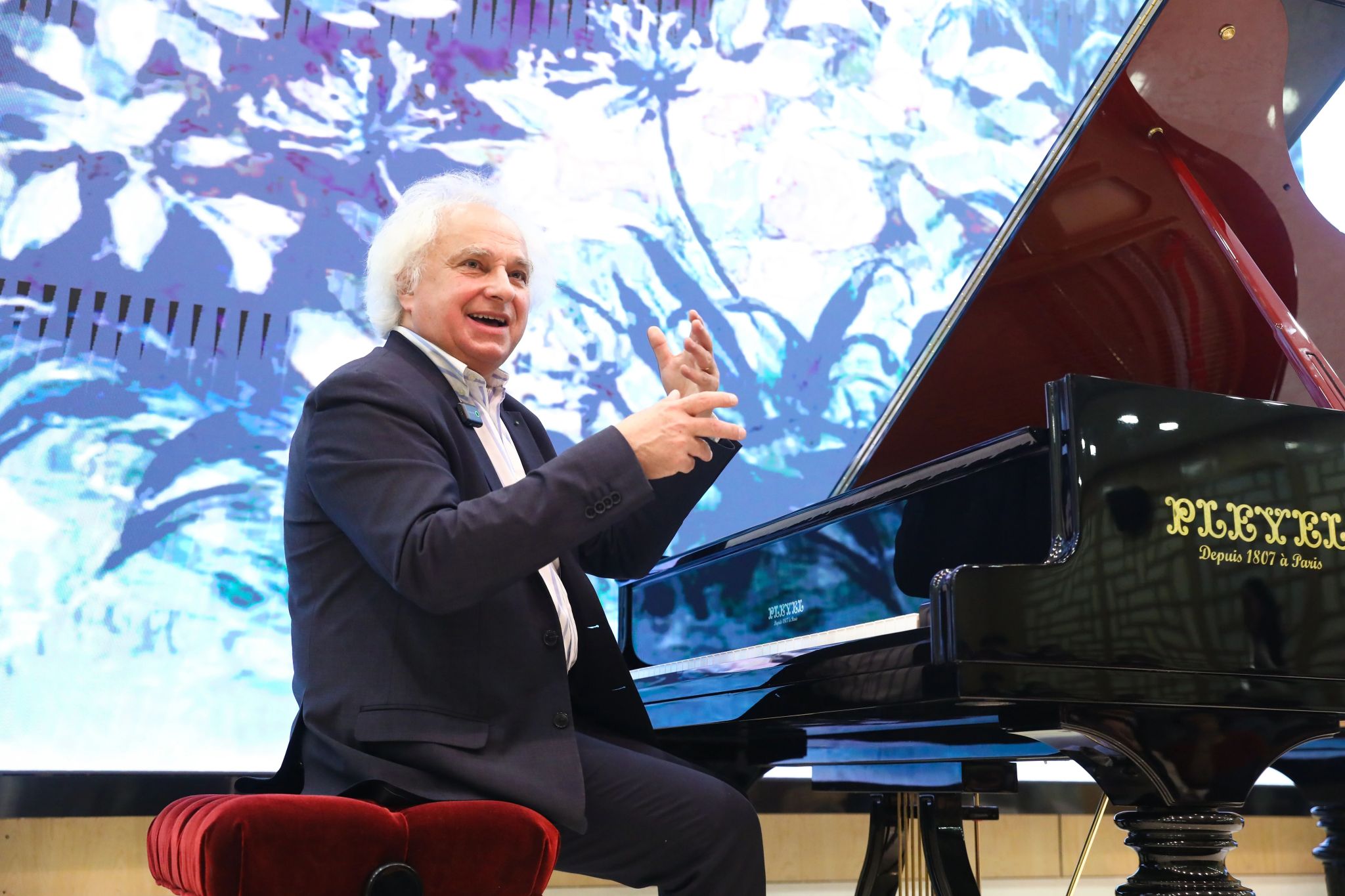
George Sand’s family estate at Nohant was a great comfort to Chopin, who had suffered the turmoil of war and exile. After the disastrous journey to Spain, Chopin was delighted to find that Nohant looked surprisingly similar to his home village in the west of Poland. Even more moving was that George Sand ordered a Pleyel piano for him. The wooden piano was, with its gentle sonority, like Chopin’s “soulmate” in performance. It was during his days at picturesque Nohant that Chopin composed a succession of melodious works on his Pleyel piano.
The village house stands as a witness to George Sand’s love for Chopin and for his music. Chopin’s room was on the second floor, and the composer would enjoy the garden scene by gently pushing the window. George Sand had a door tailored for Chopin, to keep the noise out. The Pleyel piano stood by the window. Art and nature met and mingled. Nohant was like an asylum for Chopin, pulling him away from the always-on-the-go life in Paris. Chopin could hardly find time to dedicate to composition in Paris, as he worked hard to make ends meet: Chopin gave private teaching at the highest fees in Paris. Every afternoon, he either taught students or went to listen to Bellini and other composers at the opera house. In the evening, he usually performed at salons and returned home late at night. The next morning, the cycle began all over again. But in the village house at Nohant, Chopin was entirely free to dedicate his time to composing.

The village house still feels lived-in. Chopin’s room and the kitchen are on different floors, and the composer would ring a bell for the servant if he had any need. Next to his was Sand’s room. George Sand was a quick-witted, night writer, and completed La Mare au Diable (The Devil’s Pool) in only four nights. In contrast, Chopin worked during the day. The couple kept different hours; yet, they were companions to each other in their art careers. The old house has retained its original character, with the piano, the doors and windows, and the garden remaining basically unchanged. This estate at Nohant stands as a witness to an important period in Chopin’s life and career, and is also a testament to the romantic relationship between the two great artists. Every visitor feels as if they could hear Chopin’s melodies resonating from the far past. Among the masterpieces Chopin composed at Nohant is the Barcarolle in F-sharp Major, Op. 60, inspired by the folk songs of Venetian gondoliers and the rhythm of swaying boats. The Barcarolle has been widely regarded as one of the greatest works of Chopin. Debussy hailed the Barcarolle as Chopin’s masterpiece. Prof Henry played the piece. Through his nuanced touch, Prof Henry produced a pellucid sonority, as if sadness was rippling out on the placid water surface.
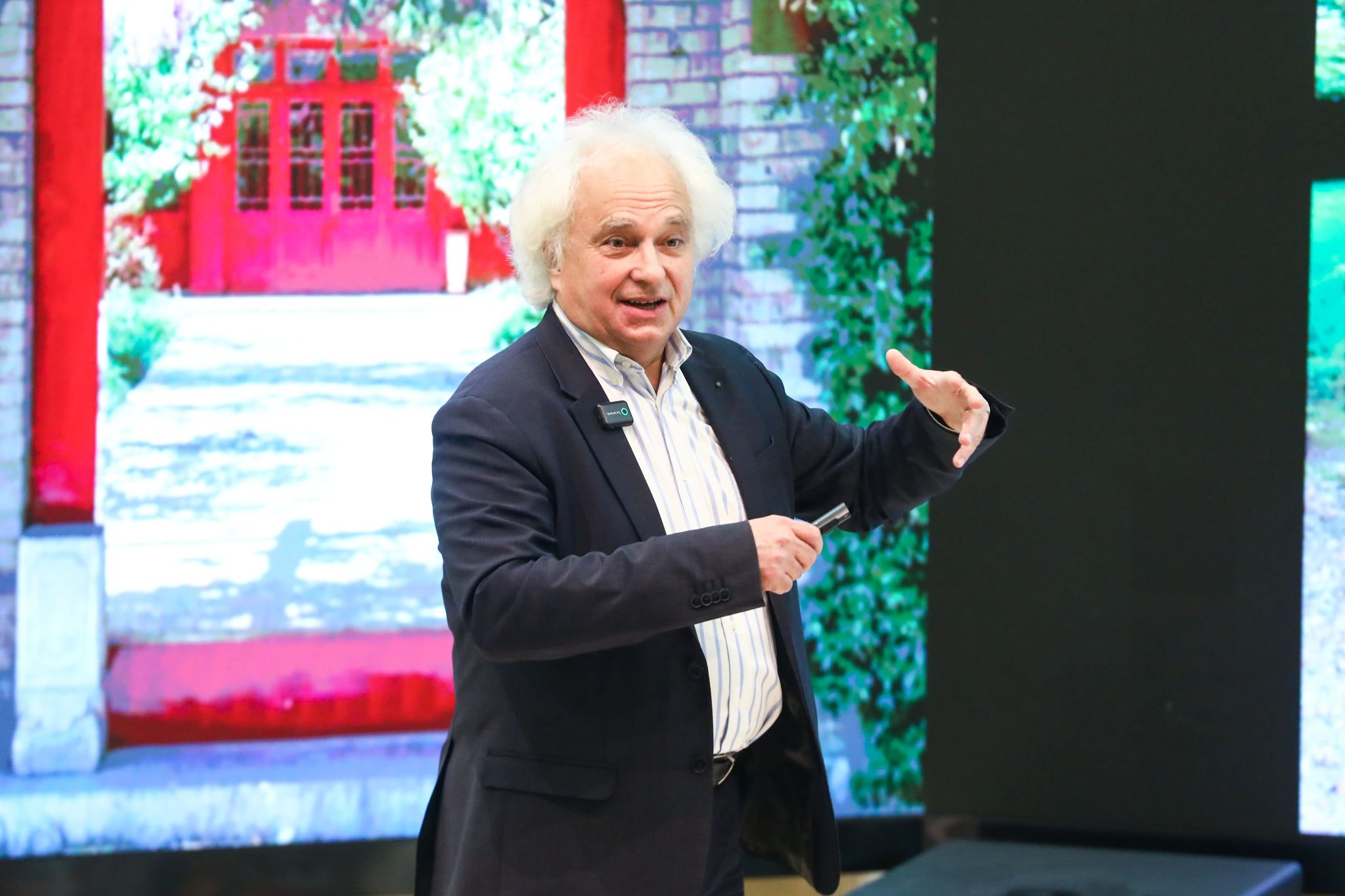
Chopin and George Sand spent six months every summer at the Nohant house during their relationship. Eugène Delacroix, a romantic painter and one of Chopin’s best friends, paid two-or-three-weeks-long visits to the couple during their sojourns at Nohant, despite the long, tiring journey. The friendship between Chopin and Delacroix led the two artists, who were devoted to their own art pursuits, to explore how to paint with sound. Like the art of painting with colours, the art of music paints with scales and modes. Delacroix compared music with painting. Like the harmonisation of discordant colours in painting, the 24 distinctively different majors and minors in music could produce remarkable melodies through nuanced transitions. Chopin was greatly inspired by Delacroix’s comparison. Chopin’s melodious works are characterised by a “colourful” tapestry of sounds, as epitomised in Prelude in C-sharp Minor, Op. 45. A flowing, unstructured masterpiece, Prelude in C-sharp Minor, Op. 45 sounds like a daydream wandering in serenity of grey tones, mottled with inky profundity, bright timber, and vitality of green. The daydream tails into the resonant blues. Chopin sent his manuscript to publishers in Paris, ensuring this painting-inspired music masterpiece was passed down. No sooner had Prof Henry finished his words than the harmonies flew out of his fingertips. The harmonies of nuanced hues were like murmurs and signs, weaving a web of intricate emotions.
Ballade No. 4 in F Minor, Op. 52 is widely considered the pinnacle of Chopin’s four ballades and features the intricate polyphony and emotional depth. The composer injected into the piece his pondering over fate and longing for his homeland. In Prof Henry’s playing, the contrast of serenity and storm surged and finally came to tranquillity. The professor led his audience to feel the dramatic tension of the epic-like masterpiece by introducing its spirit and historical background.

Chopin’s music is both burdened with the composer’s anxious concern for his country and reflects the musician’s tender love for daily life. Prof Henry played Chopin’s Berceuse in D-flat Major, Op. 57 and told the affectionate story behind it. The gentle melody sounds warm and is both a lullaby for children and a desire for peaceful life. The piece is like a tranquil night of hypnotic beauty and heartwarming tenderness.

Waltz in C-sharp Minor, Op. 64, No. 2 is full of tender melancholy. Prof Henry’s exquisite playing captured the composer’s loneliness as a vagrant. The following Waltz in D-flat Major, Op. 64, No. 1 or “Minute Waltz” formed a sharp contrast, being light and lively like a puppy and sweeping away the melancholy of the previous pieces.
The concert reached its pinnacle in the sonorous and powerful Heroic Polonaise in A-flat Major, Op. 53, which illustrates with sound a heroic people of Poland. Prof Henry played with consummate skills and passion, characterised by peerless control over power and nuance. The performance invited an extended, thunderous applause, which was also an echo to Chopin’s great soul.
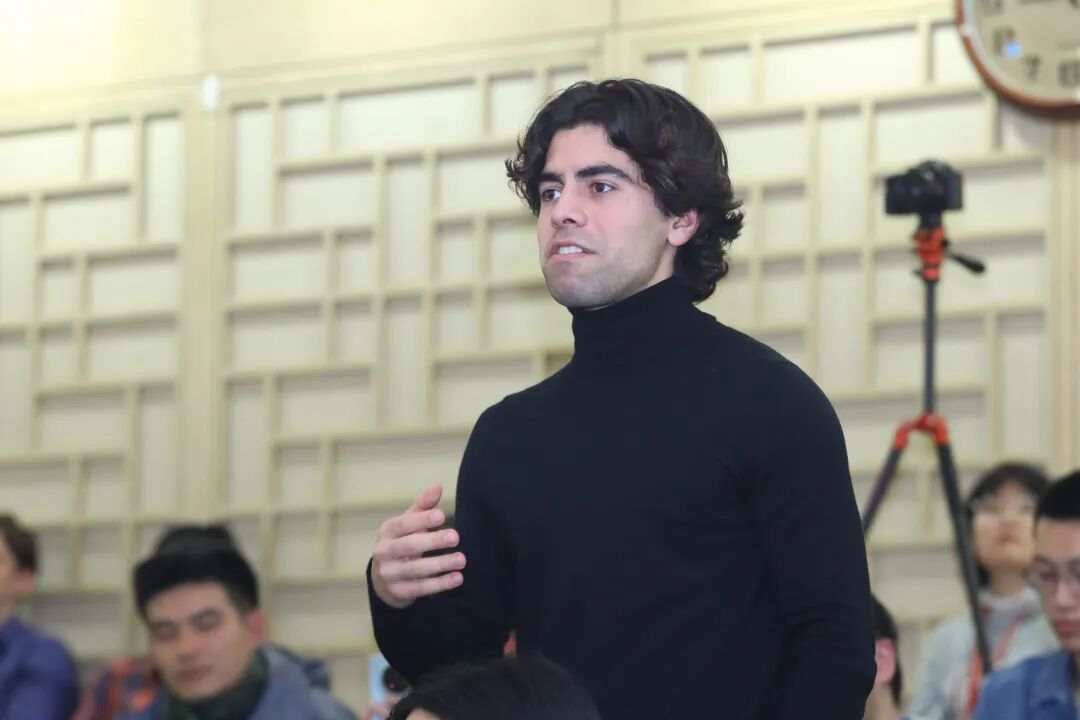
Prof Henry has engaged in research on Chopin’s life, including the places where the composer created his works. Our scholars were curious about how such academic experience impacted the professor’s understanding and interpretation of Chopin’s works. Our students also raised questions on the relationship between technical training and biographical and historical research on composers in modern piano education. Prof Henry saw little impact of places of origin for understanding a composer’s works, but he emphasised the importance of learning about the composer’s life. Music is the product of a composer’s life experience and inner world. Without an understanding of the composer’s life and historical background of his works, one cannot reach the essence of the works. A piece of music is the product of the composer’s life experience, including the environment he lived in and the people he met. A full contextual study is the guarantee for a better interpretation and presentation of the music piece.
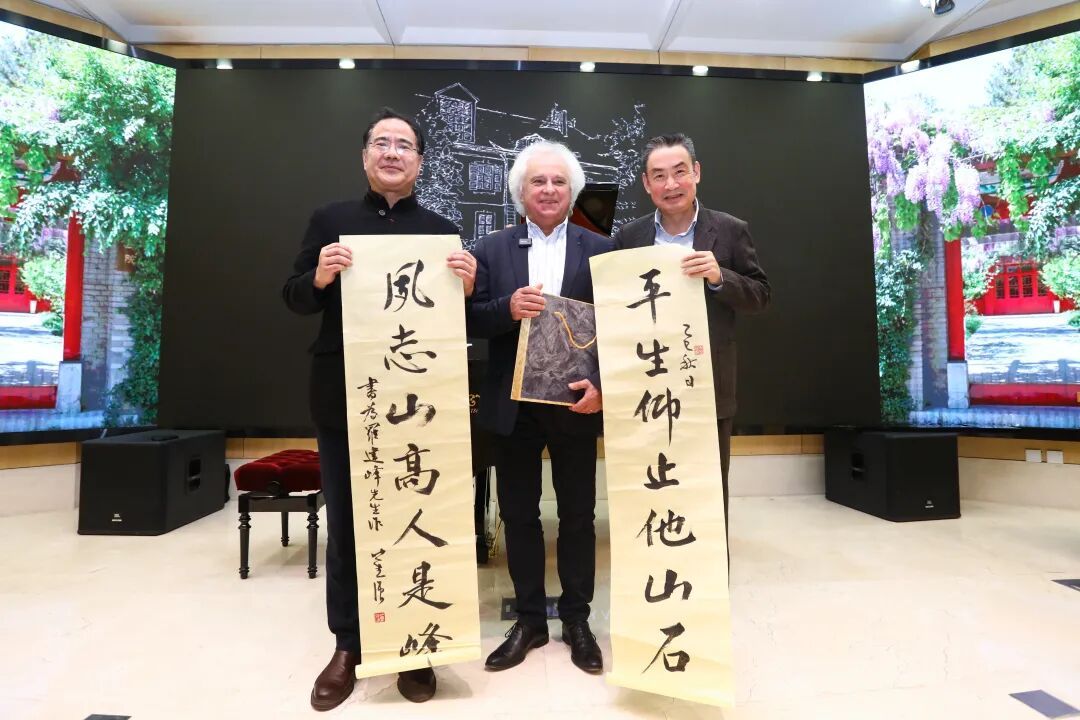
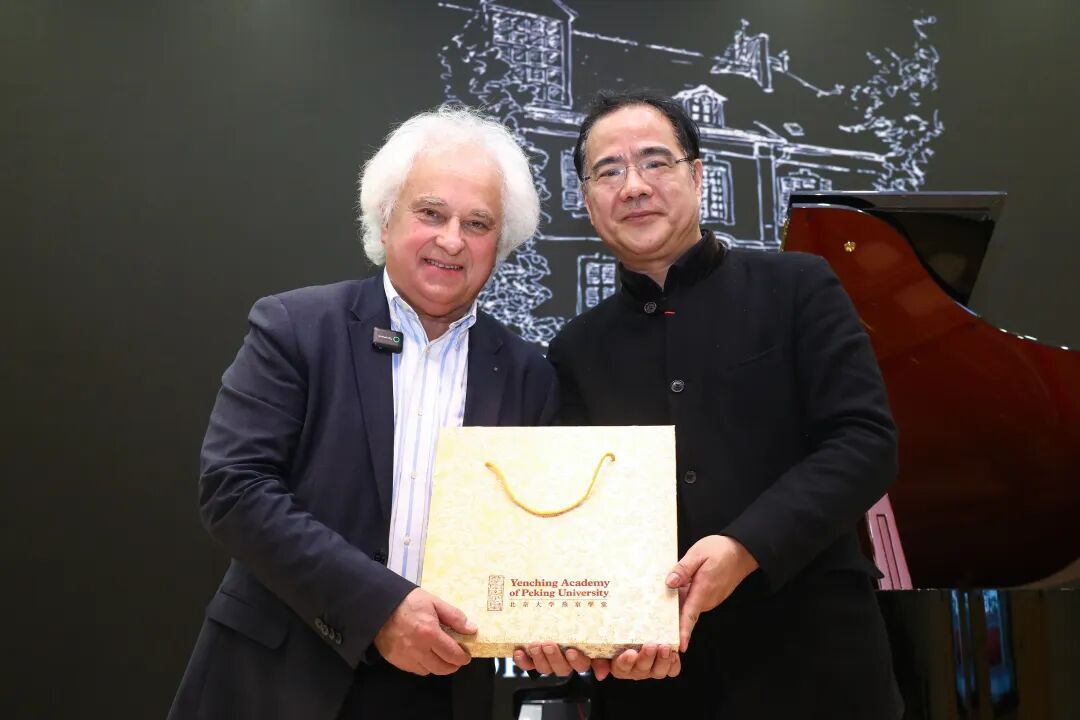
Dean Dong Qiang presented a gift from Yenching Academy to Prof Henry. Luo Jianfeng, General Manager of Pleyel China Co., Ltd., whom attended the concert. The Pleyel piano Prof Henry played on was a donation from Pleyel China. Dean Dong wrote a couplet for Mr Luo, reading “A lifelong quest for new height; Man, himself as the supreme peak”, to express his appreciation for Luo’s steadfast dedication. It is thanks to Luo and his team that the two-century-0ld craftsmanship of Pleyel reaches a new chapter. With the Pleyel piano at Yenching Academy, our scholars are able to touch the world of music in person.
Immersed themselves in Chopin’s legacy of music, teachers and students alike followed Prof Henry’s lecture and performance into a soundscape with natural, cultural, and artistic beauty. Chopin’s masterpieces have been lingering on the Pleyel piano and over the campus.
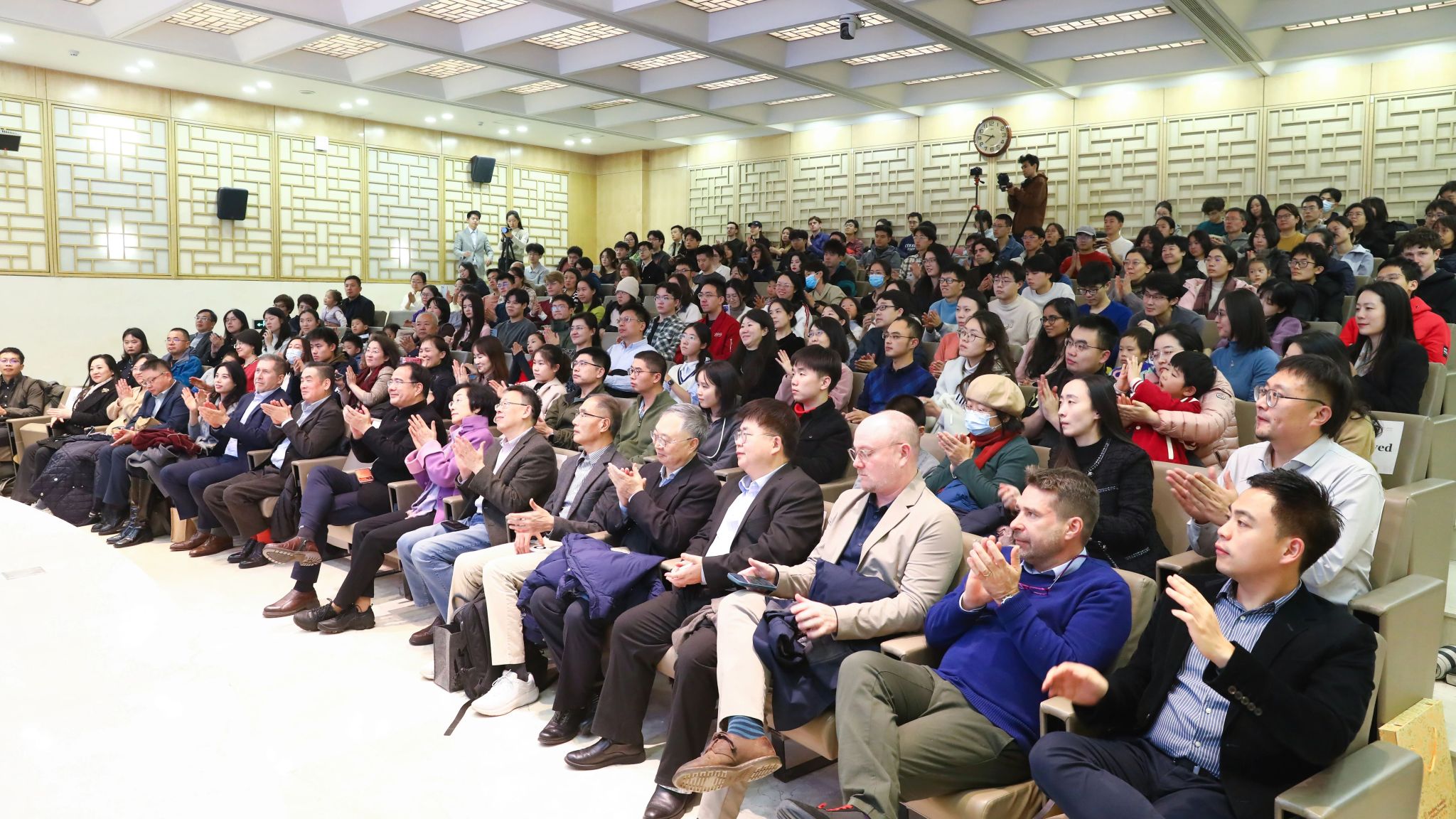
The B101 hall was packed. Among the audience were teachers and students from YCA and other colleges and departments of Peking University, as well as children of PKU faculty and staff. YCA Honorary Dean Yuan Ming and participants for “Study China IN China” symposium co-sponsored by Yenching Academy and the Levinson Program in China and Asia-Pacific Studies of Cornell University also attended the concert. Dean Dong Qiang noted that the modern society needs more than ever humanities and liberal arts, an educational tradition at Peking University, so that students around the world could live and study in a people-centred environment that is open to dialogue. The Chopin Night at Yenching Academy was a cultural event showcasing the great strengths of both traditional Chinese culture and diversity of human cultures. It stood as a testament to the cross-cultural exchange and learning between China and the rest of the world.