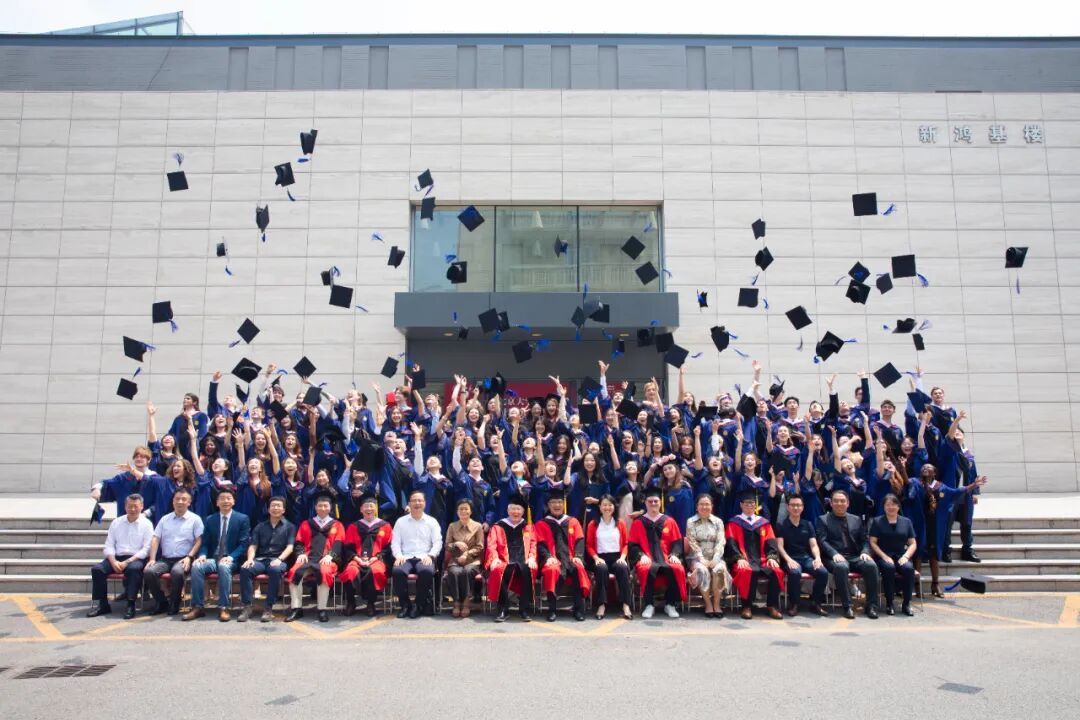
As another summer steals into the Peking University campus, verdant trees cast shadows over campus paths and the melody of the Peking University alma mater resonates in the air.
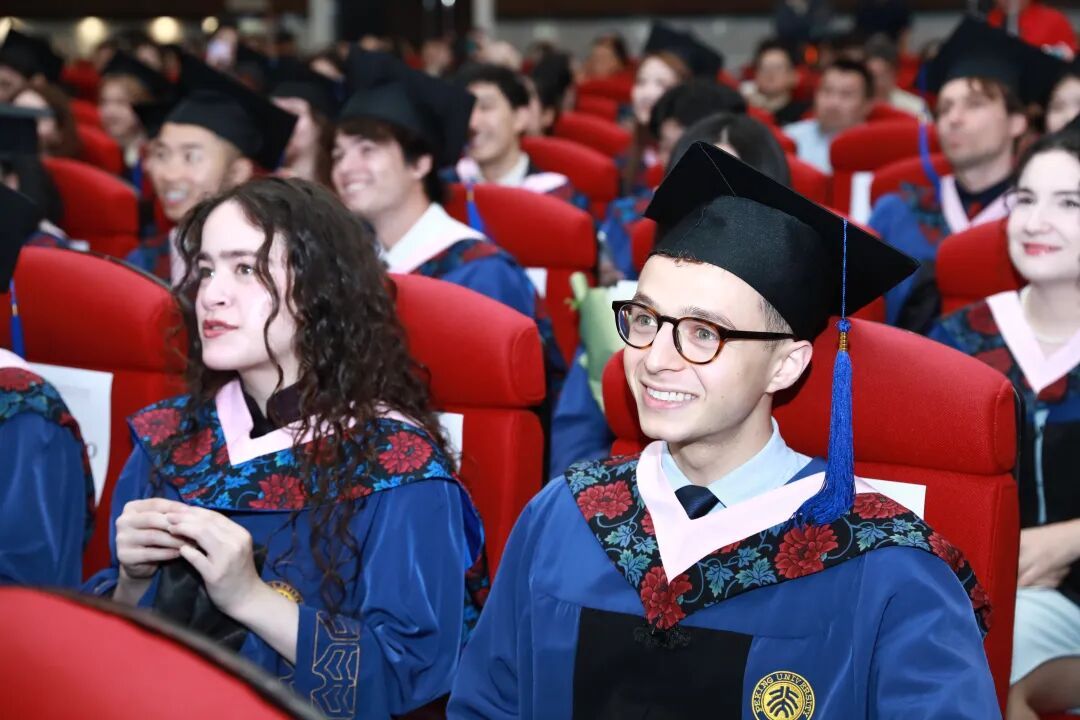
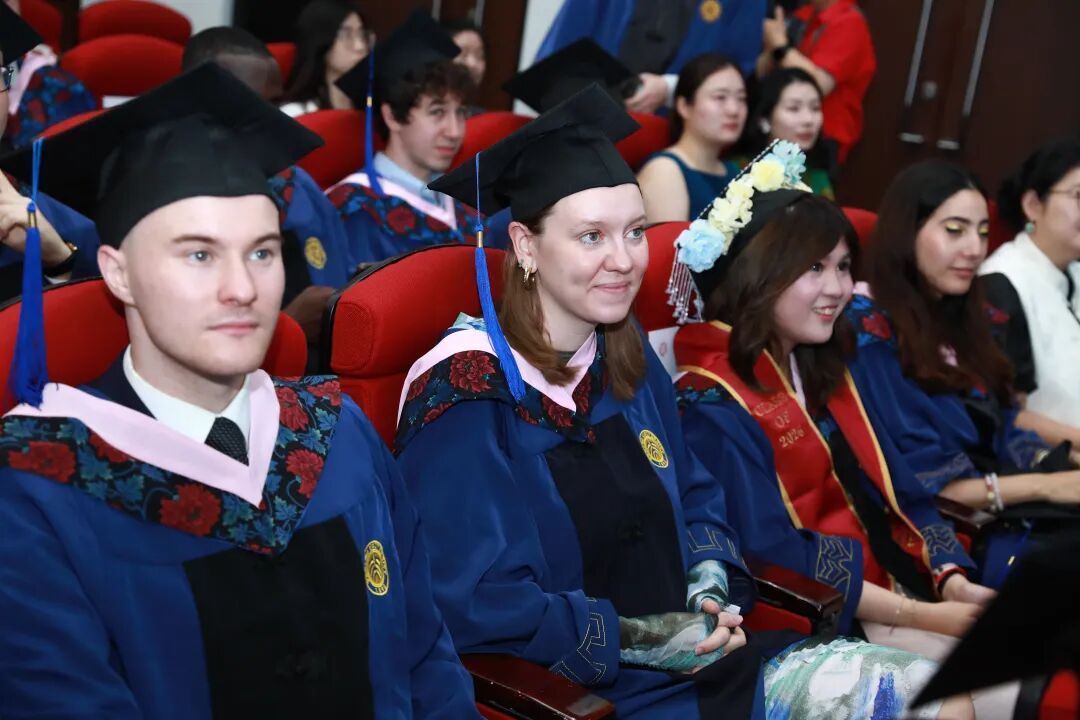
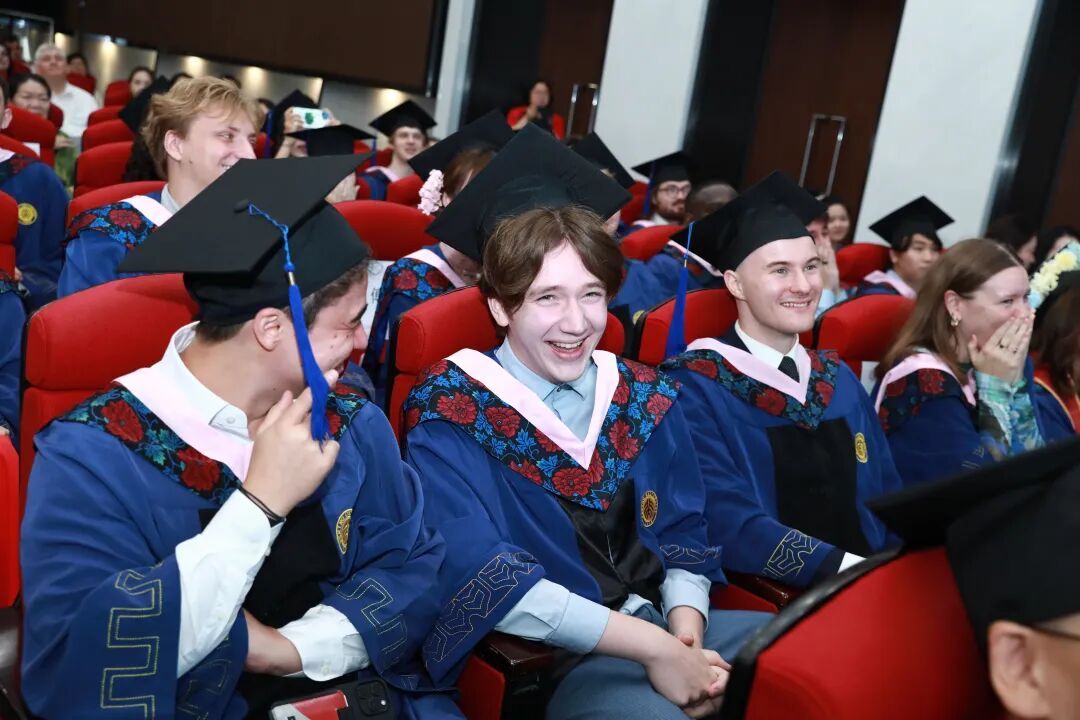
On the morning of July 2, Yenching Academy held its 2026 Graduation Ceremony at Qiulin Auditorium. Together with parents, Academy faculty, and staff, the Yenching Scholars from the 2024 Cohort celebrated their graduation, marking both an end of their time at YCA and the beginning of another new chapter in their life journey.
The tribute video of playbacks unrolled a vivid tapestry of Class 2026 during their two years at YCA—their first class meeting, their intensity during the mentoring conversation, and their heated in-class discussion—more than just assiduous scholars in the classroom, they were agile, vigorous athletes and field-based researchers.
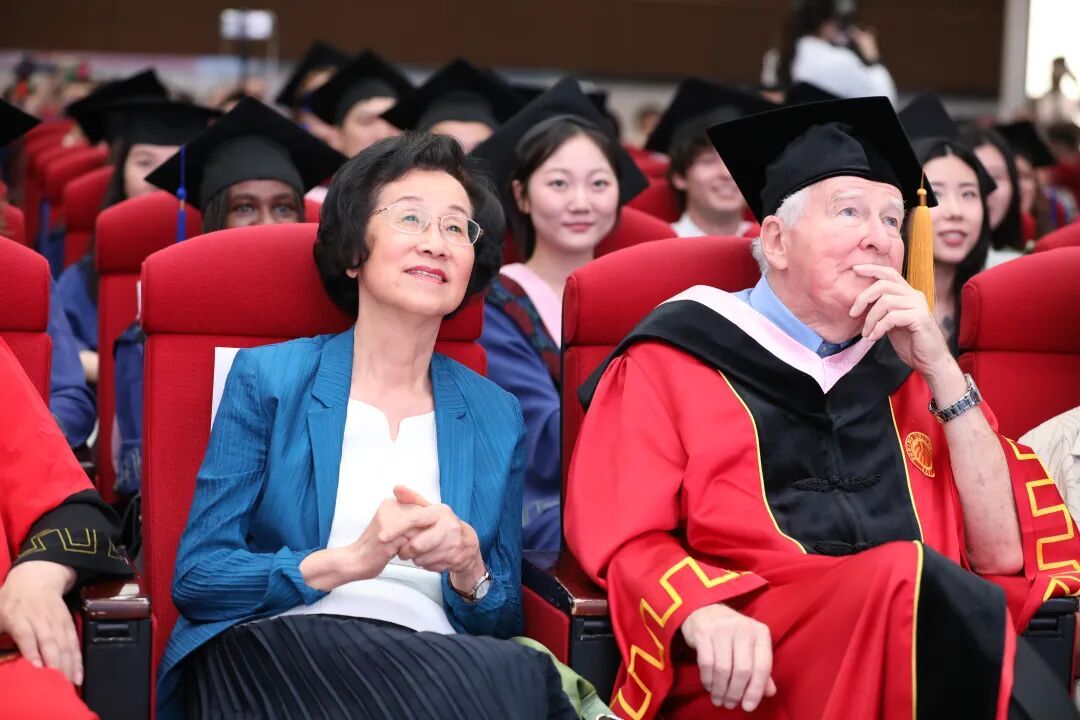
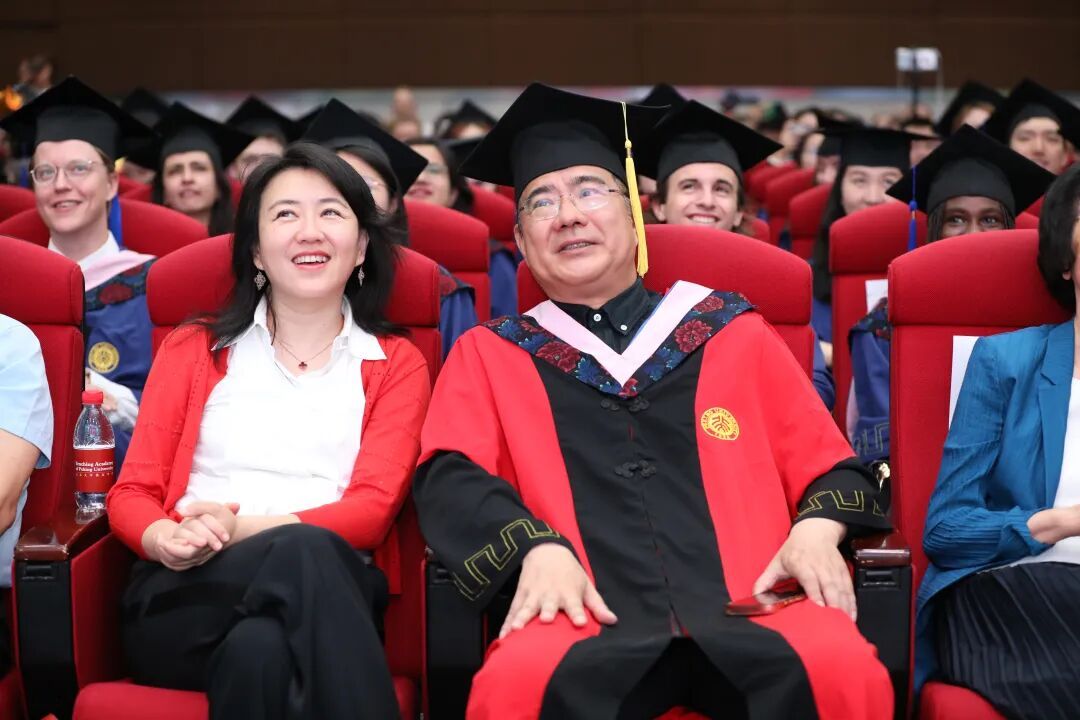
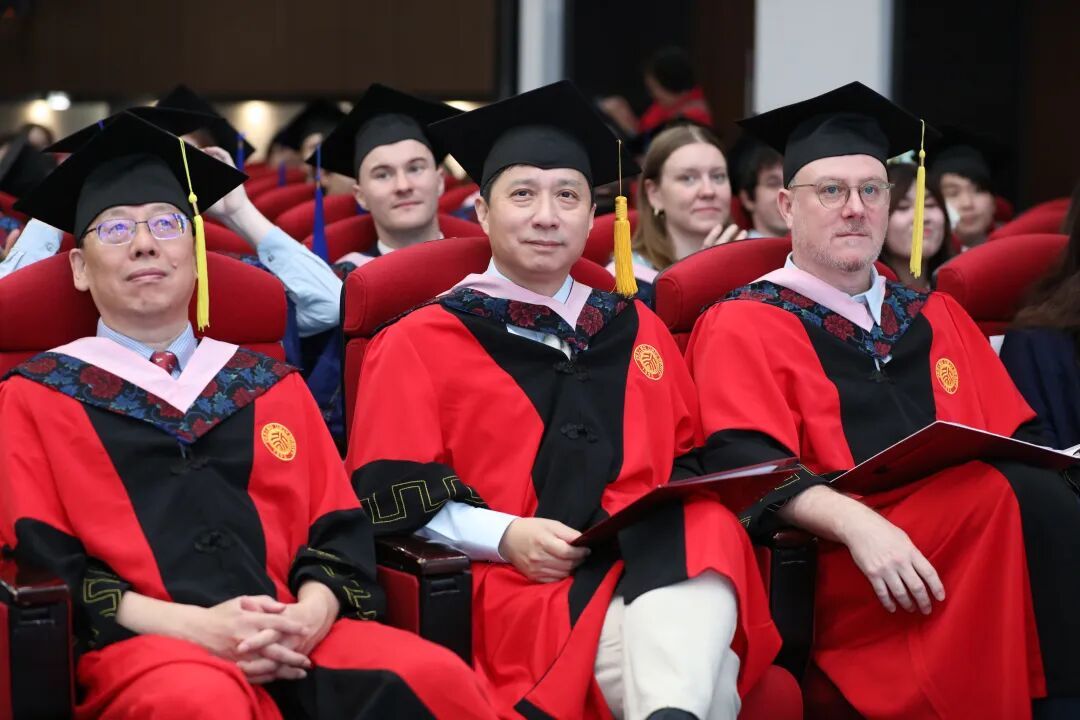
YCA Associate Dean Brent Haas hosted the ceremony. He first introduced the guests and leading officials present at the event and extended congratulations to the graduates. Haas acknowledged the graduates’ scholarly dedication: While they might have been uncertain about their research direction upon joining YCA, they continued to explore and navigate the academic landscape at the Academy; they have now fulfilled the Academy’s stringent academic requirements. He congratulated all the graduates for forging a distinctive scholarly voice of their own.
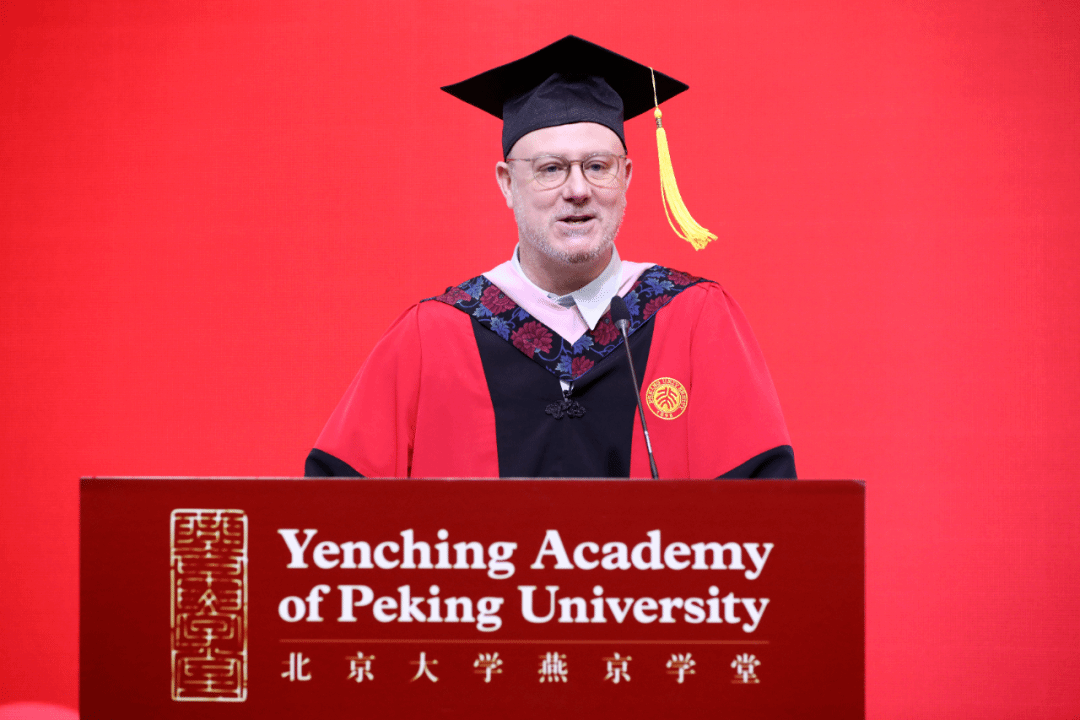
Brent Haas expressed the hope that our newest alumni-to-be will remain critical thinkers and truth seekers that stay open-minded and humble, upholding intellectual rigor and pragmatism even if they go in their own directions—some to the workforce, some to further graduate education, and some to research paths. He conveyed the belief that our graduates will excel professionally and academically in their future pursuits if they stay true to their original aspirations and sustain their scholarly perseverance. Haas hoped that when they join the YCA alumni community, the Class of 2026 can support those who come after them and remain open, inquisitive, and integrative in their future career and personal relationships. The associate dean articulated appreciation for the two years with this group of graduates, feeling that he was able to be both a teacher and a friend of the Scholars. He expressed great expectations for their futures.
Roger Thomas Ames, Humanities Chair Professor at Peking University and Professor Emeritus of Philosophy at University of Hawaii at Manoa delivered a speech as the faculty representative. The professor hailed the “local/global diversity” of the Academy as “the best shot” for young scholars. He believed that the students “have learned more from each other, than from any particular faculty member.”
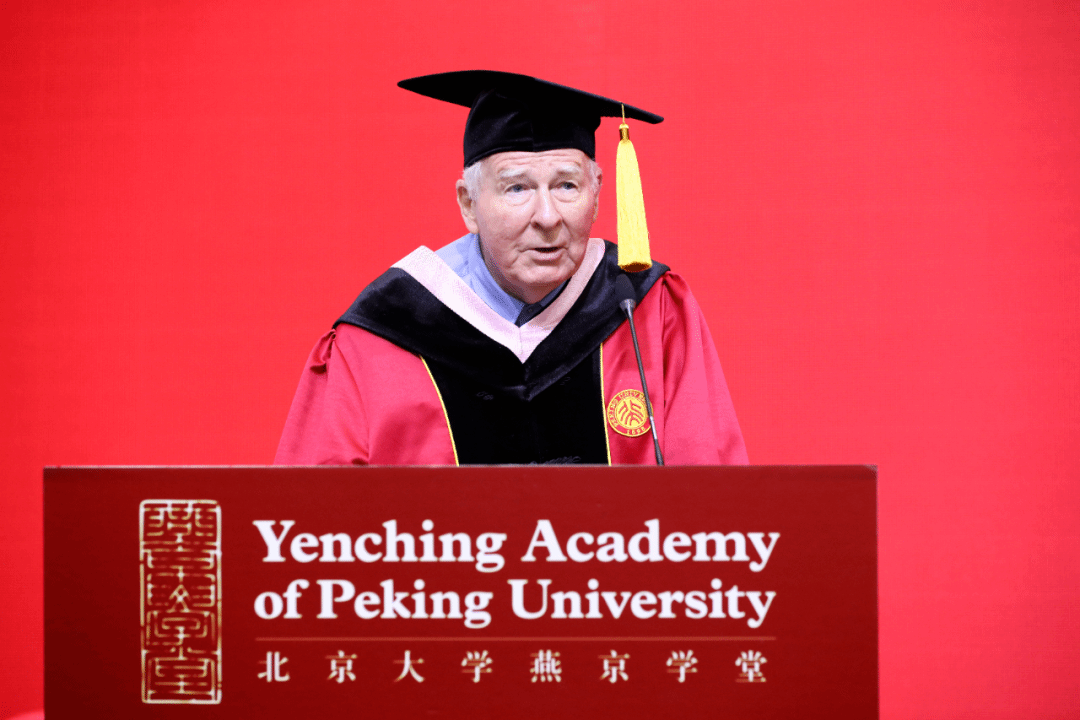
The professor noted that the graduates may feel exhilarated with “a touch of anxiety,” when they were looking forward and backward at graduation. He also observed a sadness at departing and asked the students where the visceral feeling came from. To this end, Prof. Ames guided our graduates to a last lesson in philosophy before leaving Peking University. The professor argued that “The story of China is family. Family is where the Chinese written language itself is born. Family is China’s conception of the political—jia, guo, tianxiatonggou家、国、天下同构. Family is the governing cultural metaphor, China’s prime moral imperative.”
Prof. Ames drew a comparison between the political theorist Michael Walzer and Confucian traditions to elaborate on the unique values of “family” and “family feeling (qinqing)” in traditional Chinese culture. The professor emphasized that “family feeling” is not exclusive to the Chinese culture, but an emotion that is shared by all human cultures and that “can bring us together with a sense of human solidarity” while retaining diversity of each human culture.
Prof. Ames wrapped up his speech with a heartfelt note, “YCA is a decidedly family experience, certainly with the ups and downs of family feeling, and not always easy, but it has been deep and important. When, as the years slip away, you think back on your YCA years, and when sometime you come back to visit, you will always be coming home.”
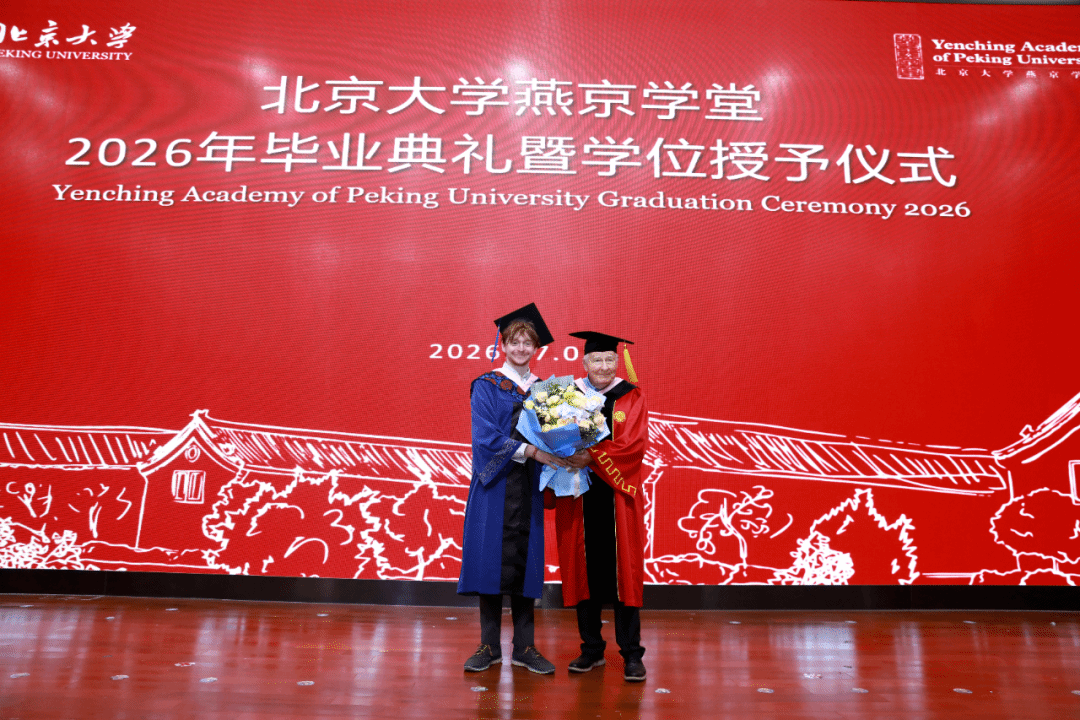
Aneka Rajbhandari from Nepal spoke on behalf of the graduates. Aneka first came to China 11 years ago. Having completed her Chinese language study and training, Aneka earned her bachelor’s degree in political science from the School of Government, Peking University in 2014, the same year that Yenching Academy was established. Like a miracle, an indissoluble bound has since been forged between Aneka, Peking University, and Yenching Academy.
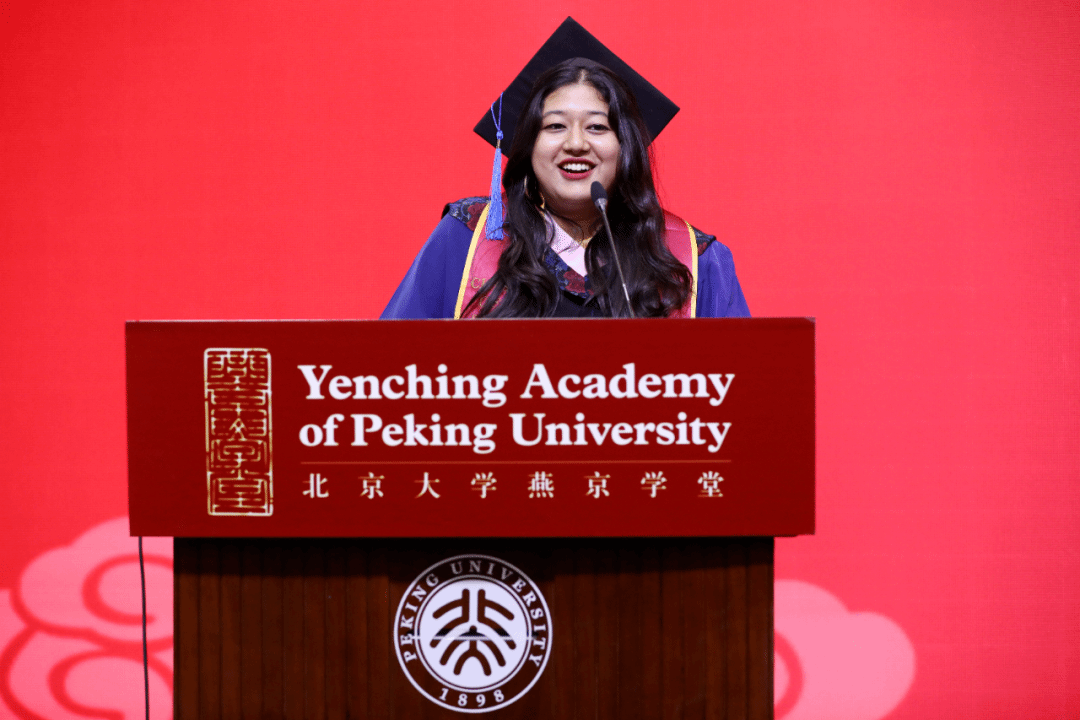
Aneka has deeply engaged with China-related research and practice, delving into the relationship between China and the rest of the world, particularly China-South Asia relations. Immersed in the Academy’s diverse coursework and field trips, its flagship YGS conference, and its multicultural setting, Aneka has challenged her own assumptions and gained broader global perspectives while forging precious friendships that transcend national boundaries. With her husband, an alumnus from the fifth cohort of the Academy, the couple co-founded The Araniko Project, an academic and cultural platform dedicated to China-Nepal relations.
Before ending her speech, Aneka quoted a sentence from the Tang poet Zhang Jiuling, “True friends are never parted by distance, and a feeling of community transcends kilometers.” Upon completing her fruitful years at Peking University with her dedicated, nurturing teachers and loving fellow students, Aneka believed that these fond memories will be her strength as she navigates a new landscape of her life.
Lei Xuefei, an alumna from the 2018 Cohort and a senior deputy manager at a central financial institution, spoke on behalf of the alumni. She recounted warm moments at YCA—the door left open by the dormitory attendant auntie for those who worked on their theses deep into the night, cake and guitar while lingering in the activity room, the teamwork for the preparation for “China in Transition,” and the camaraderie forged among fellow students as they worked to meet deadlines in the library. Lei cherished every frame of her YCA life as the essential representation of living in an interconnected community.
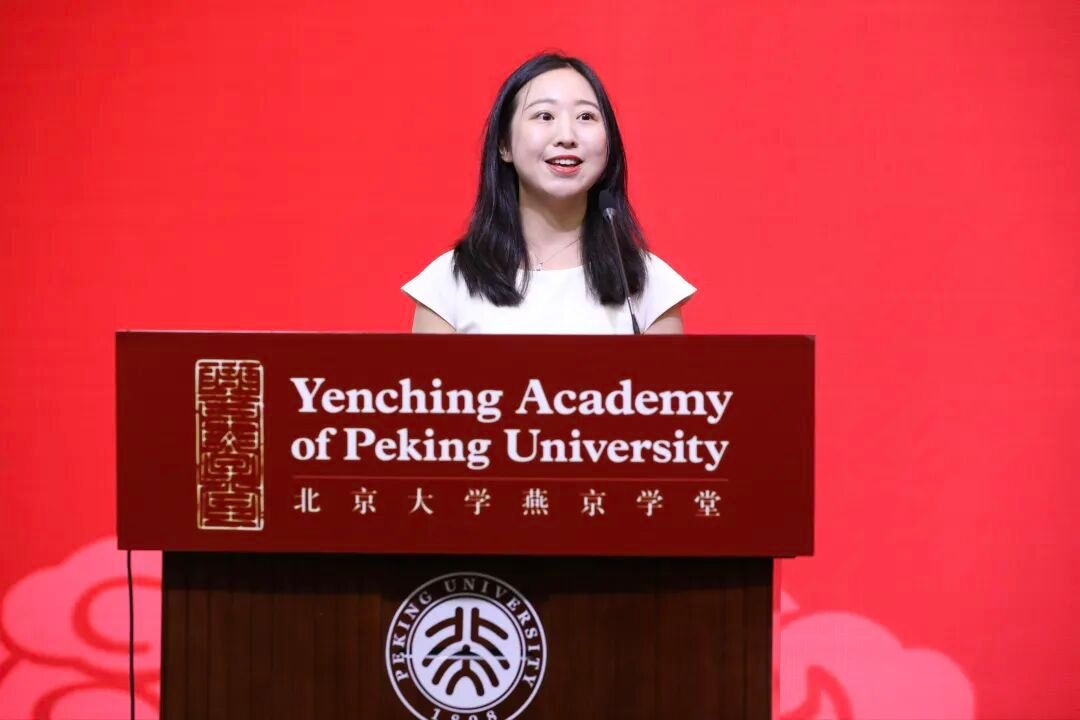
Lei noted that in her work she can respect and understand different views and perspectives, thanks to the sense of inclusiveness and empathy she gained during her time at YCA. She expressed the belief that “like minds feel no distance despite mountains and oceans away,” as well as the hope that everyone could continue to pass on this goodwill in everyday life.
At the end of her remarks, Xuefei conveyed the hope that our new graduates could translate the cross-cultural perspectives they’ve taken on at YCA into strength and vitality in their future career development and academic endeavors, making the broader world a genuine interconnected community.
Dean Dong Qiang delivered a graduation speech themed “Focus on China, Contribute to the World.” (Graduation Speech | Dean Dong Qiang: Focus on China, Contribute to the World) Given the season of graduation, the dean professed reluctance to part with the graduates; at the same time, he believed that our alumni would, like himself, be impressed by every single moment of their life at YCA and that they would have the opportunity to meet again at every unexpected place around the world.
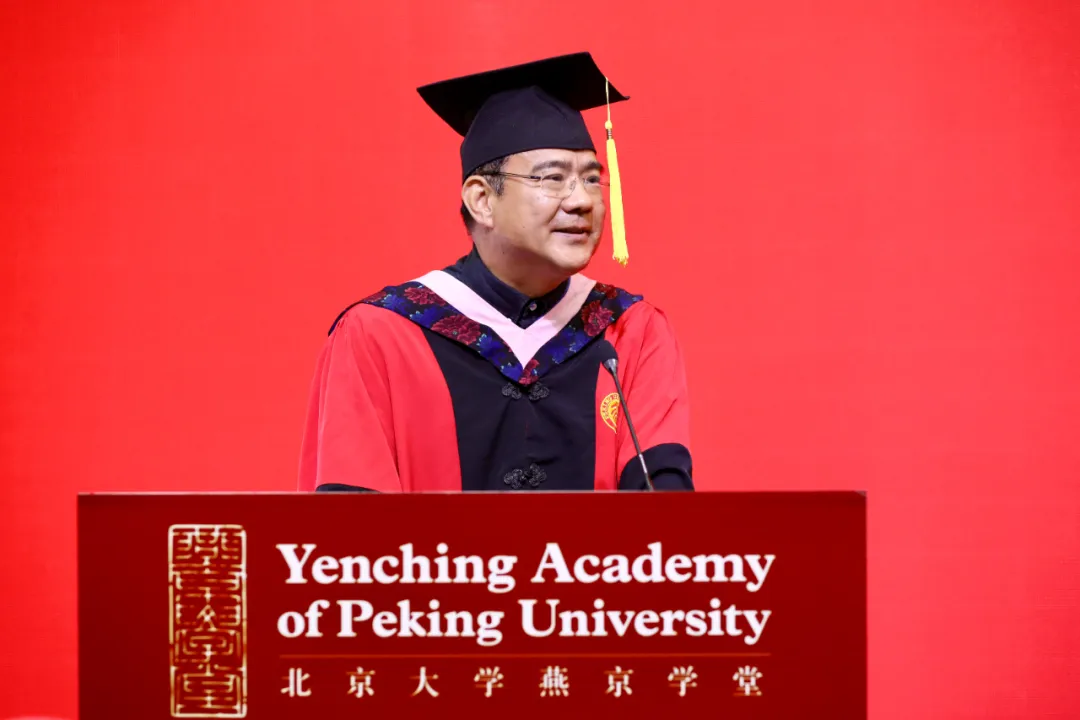
Dong noted that through coursework and hands-on practical experience over their two years’ study at YCA, our graduating Scholars have moved closer to what China really is and laid a groundwork for future cross-cultural awareness and research; yet, this is only the first step. Prof. Dong drew an analogy from “focus”, a term originating from optics and photography. Renaissance linear perspective drSaws the viewer to focus on a single point and causes the subject’s details to stand out from a vast yet blurred background. Likewise, one is susceptible to a limited perception if one sees a nation from a single perspective. China is a large country that is layered, multi-faceted, and ever-changing. The fast-evolving Chinese society that we know today presents itself against the enduring tapestry of a civilization that has sustained itself over the course of millennia. This interplay exemplifies the distinctive charms of both ancient Chinese civilization and modern China; for this reason, it is an enduring endeavor to truly understand China.
Dong stressed that China has been an integral part of the global landscape. China has engaged remarkably with the world over the past four decades and contributed wisdom and achievements to benefit contemporary global development. The great rejuvenation of the Chinese nation does not imply the pursuit of hegemonic dominance; rather, it catalyzes equal dialogues between cultures and constructs worldwide partnerships at a higher level. Yenching Academy was established to build bridges between China and the rest of the world. Prof. Dong stated an expectation for more than surface-level understanding China from Yenching Scholars. He conveyed a hope that the graduates could bring to global audiences a perspective on what China truly is, including its philosophy of development and its contributions to the world. A great power is not defined by military might or world-dominating ambitions; a truly great nation takes roots in “people’s moral ethos, civilizational institutions, people-centered values and splendid cultural heritage.”
Dean Dong then spoke to the essence of Chinese civilization. Chinese civilization is an inherently inclusive system, open to new interpretations and adapting constantly to the changing world. From the myths of Classic of Mountains and Seas and Qu Yuan’s Heavenly Questions to Li Bai’s poetry, Chinese literature has brimmed with imagination and curiosity about heaven, earth, and all things living in between. Over the course of millennia, Chinese civilization has been enlivened with curiosity and romance. Ancient Chinese curiosity about micro- and macro-cosmoses remains a beacon for younger generations to navigate the high-tech landscape of the AI era. Along the enduring threads of Chinese civilization, one will brave the shifting future landscape.
At the end, Dean Dong wished all the graduates a promising future and hoped that they would hold dearly their days at Yenching Academy on the shores of Weiming Lake. He left the audience with lines from Li Bai’s poetry, hoping that they roam freely across the vast expanse of life with the reins of humanistic literacy they’ve cultivated at the Academy.
When they first arrived at the Academy in the autumn two years ago, the 2024 Cohort wrote down their expectations of future on small notecards. On the graduation ceremony, Brent Haas invited Imogen Parsley (UK), Benjamin Everett-Lane (USA), Perpetual Cudjoe (Ghana), Nicole Accalia Angriawan (Indonesia), Ma Ning’er (China), and Jing Yuan Lee (Singapore) to read out their cards, to reminisce on what they have achieved over the past two years.
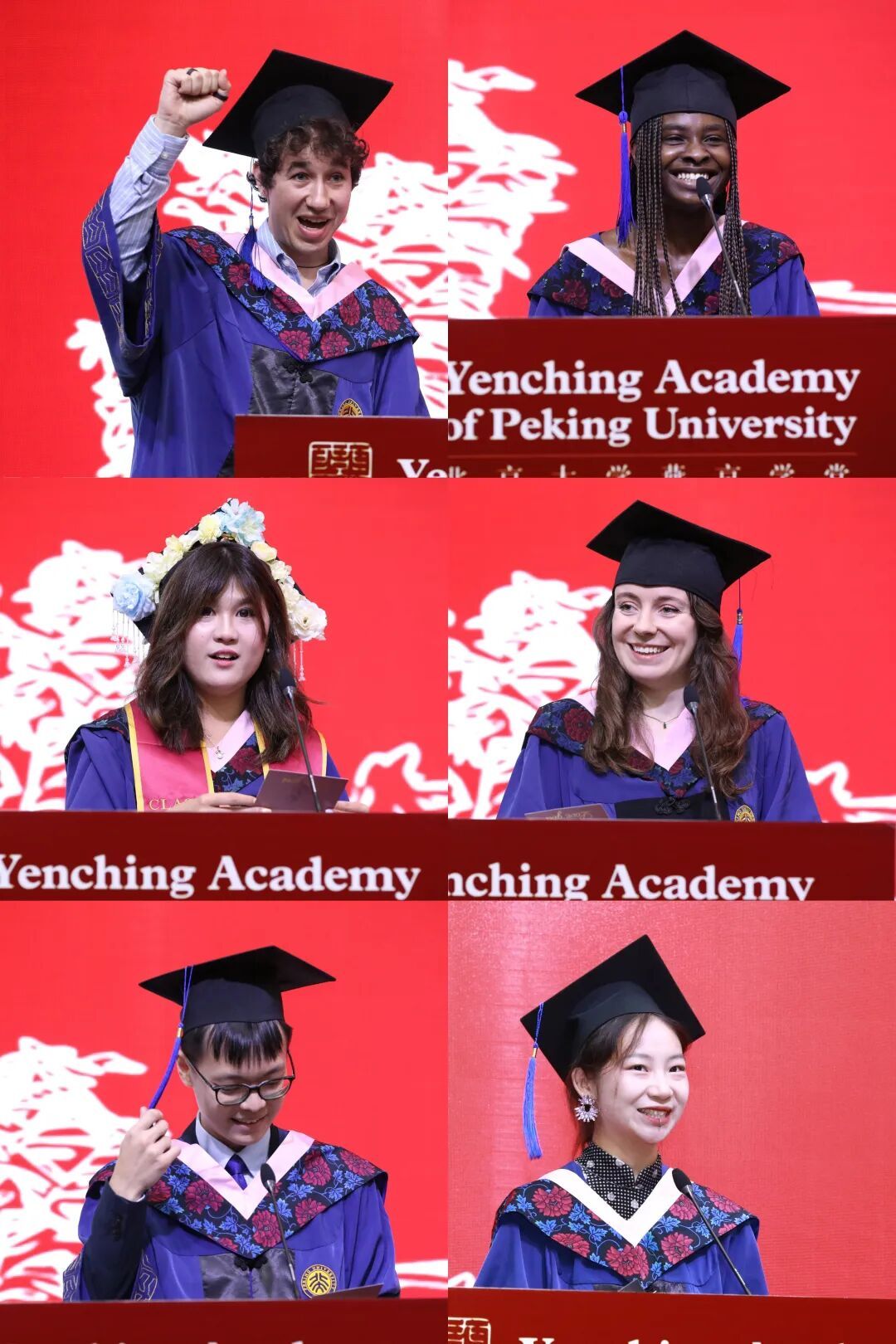
“I hope that I can write a satisfying dissertation.”
“I hope that my Chinese will improve.”
“I want to be a pride of the Academy, of the University, and of myself.”
“Stay true to my aspirations, stay true to the end.”
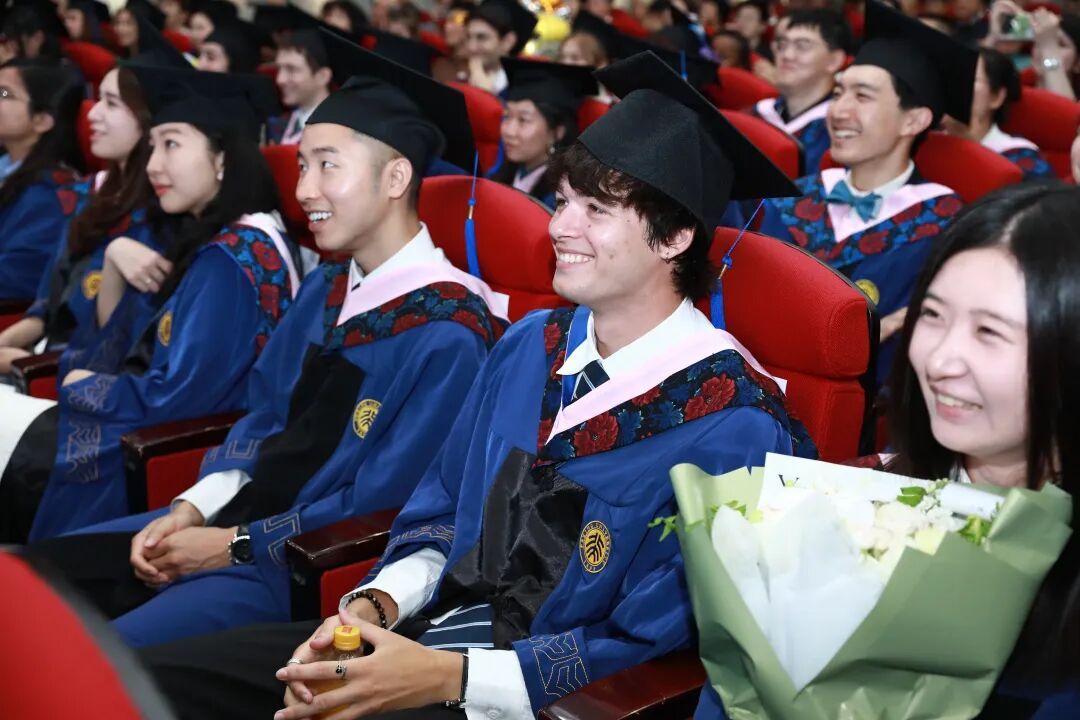
Our graduates relived every moment at the Academy as they read the words written by their own hands two years ago. And the words written on paper are just a brief representation of all they have to say. Sad as they may be when bidding farewell to each other and to the Academy, they will draw loving encouragement for the future from these fond memories.
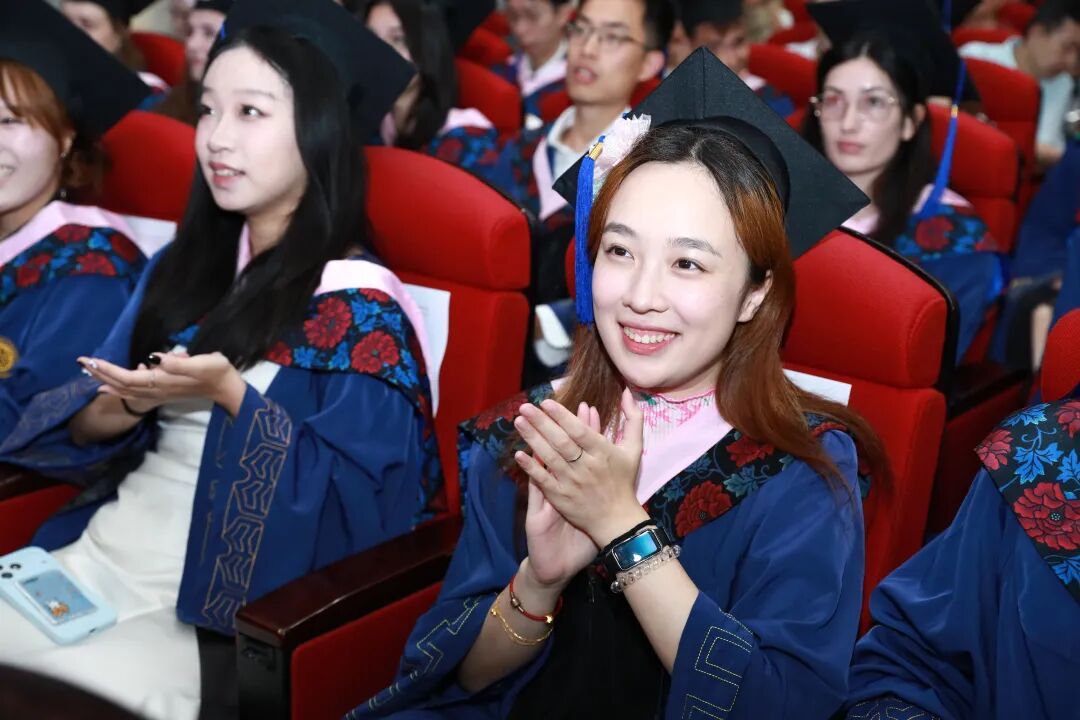
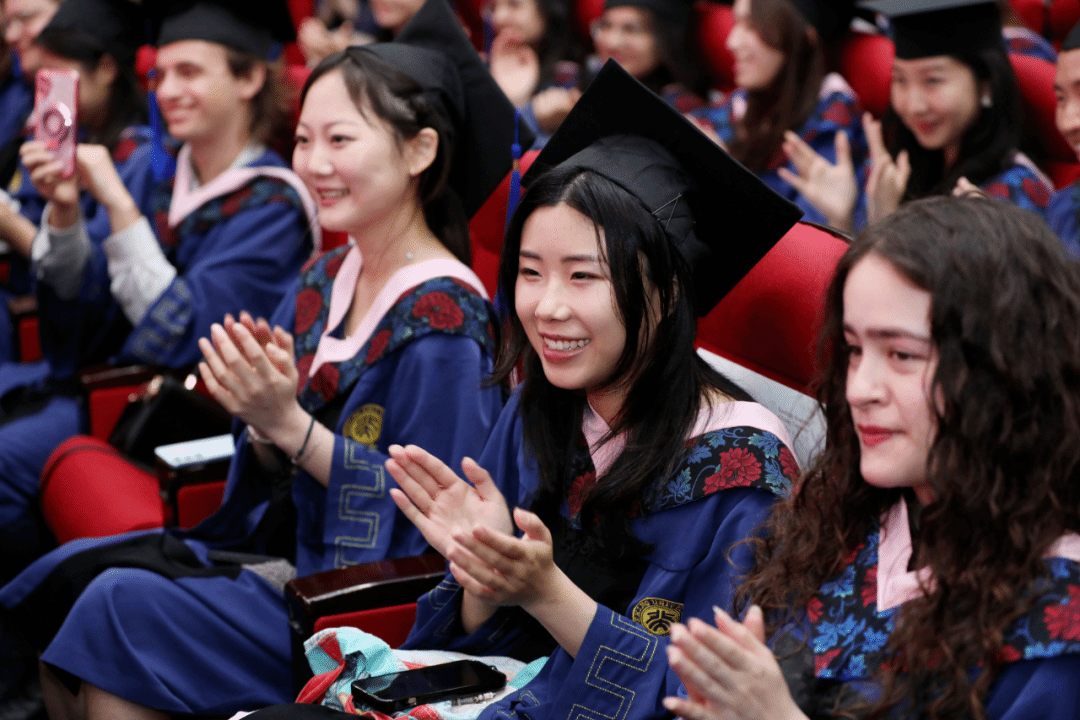
As the ceremony continued, YCA Assistant Dean Chen Changwei first read out the list of absent graduates; then, Lu Yang, Director of Graduate Studies, read the names of graduates present. Dean Dong Qiang and Associate Dean Fan Shiming turned tassels and conferred degrees upon the graduates in attendance, amid applause and cheers.
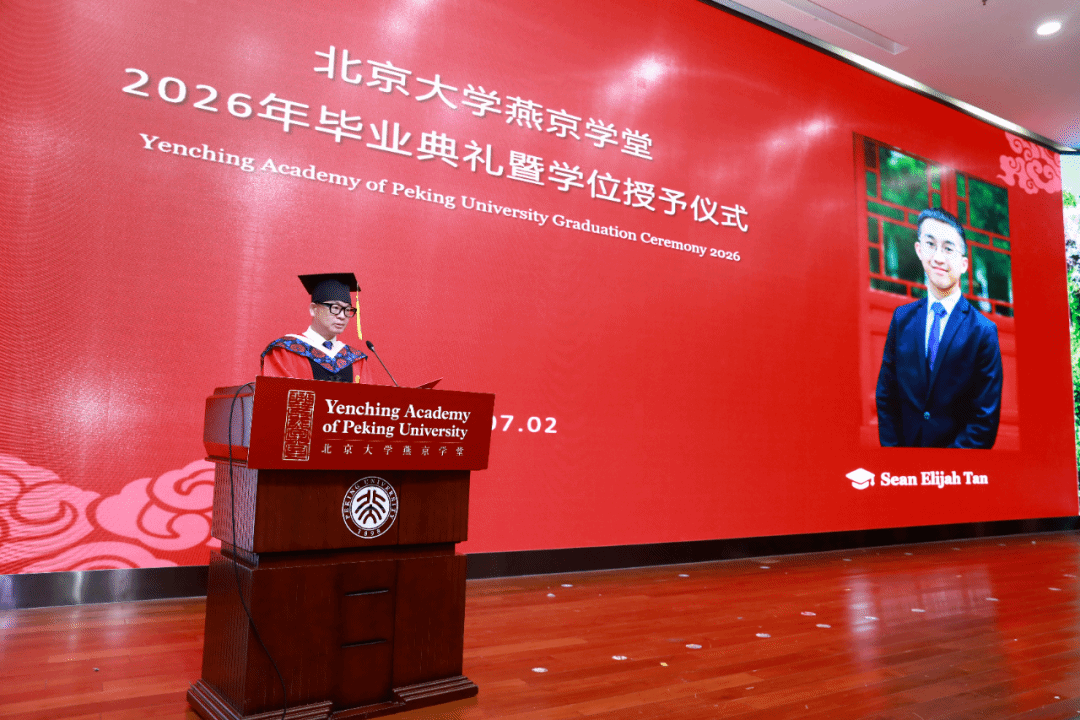
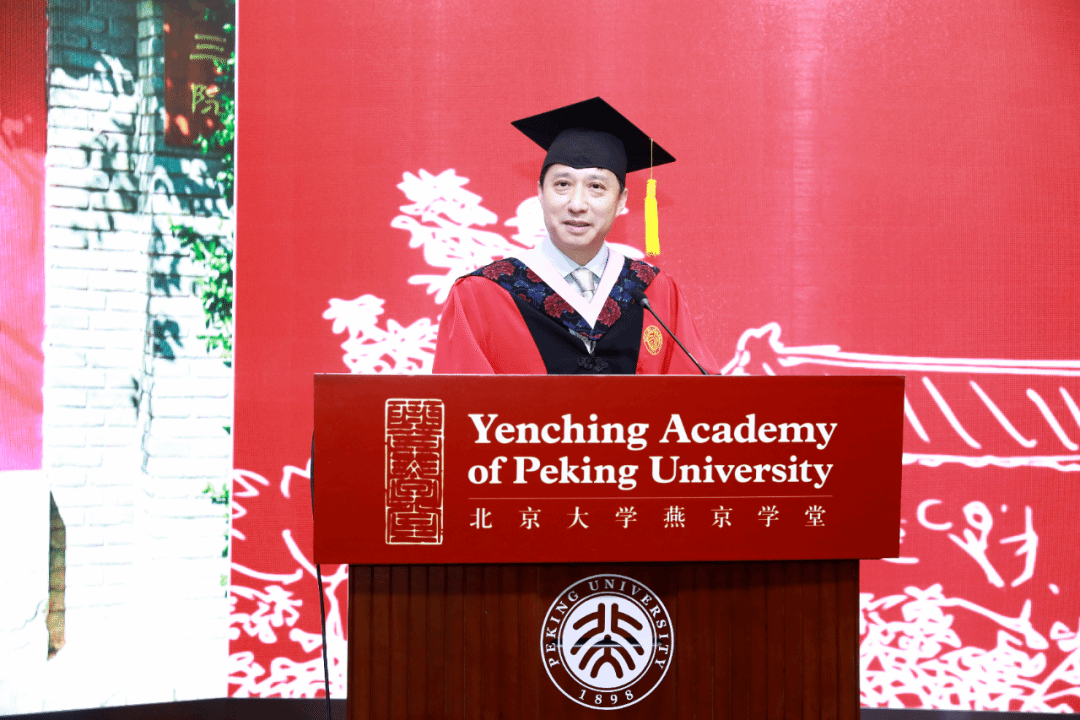
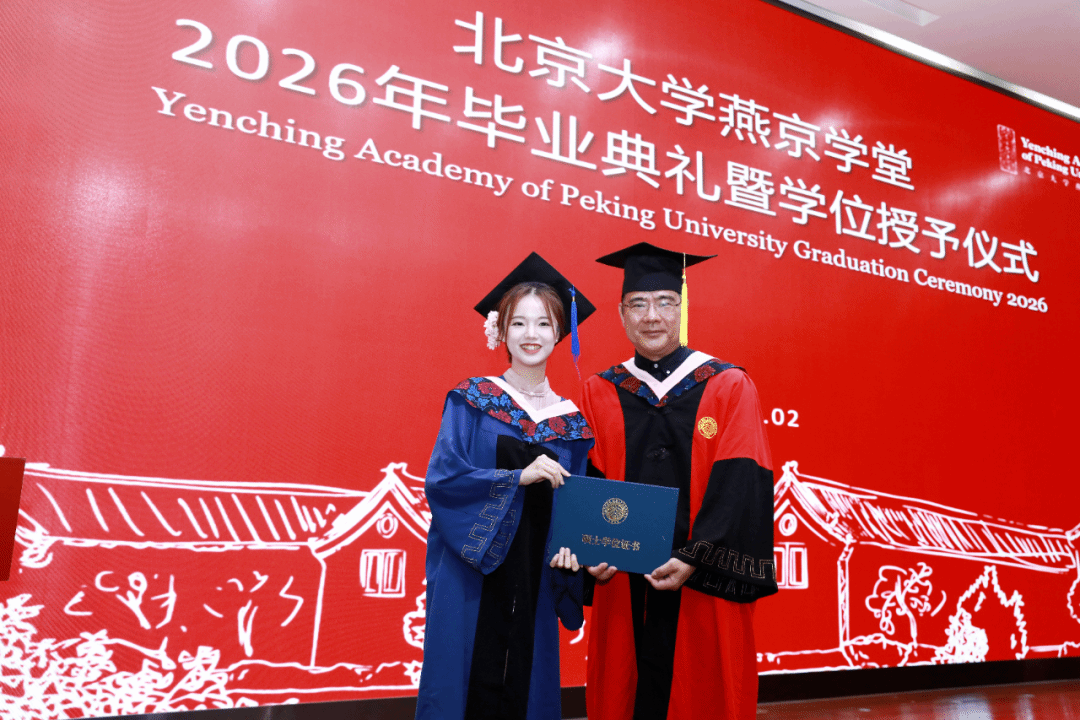
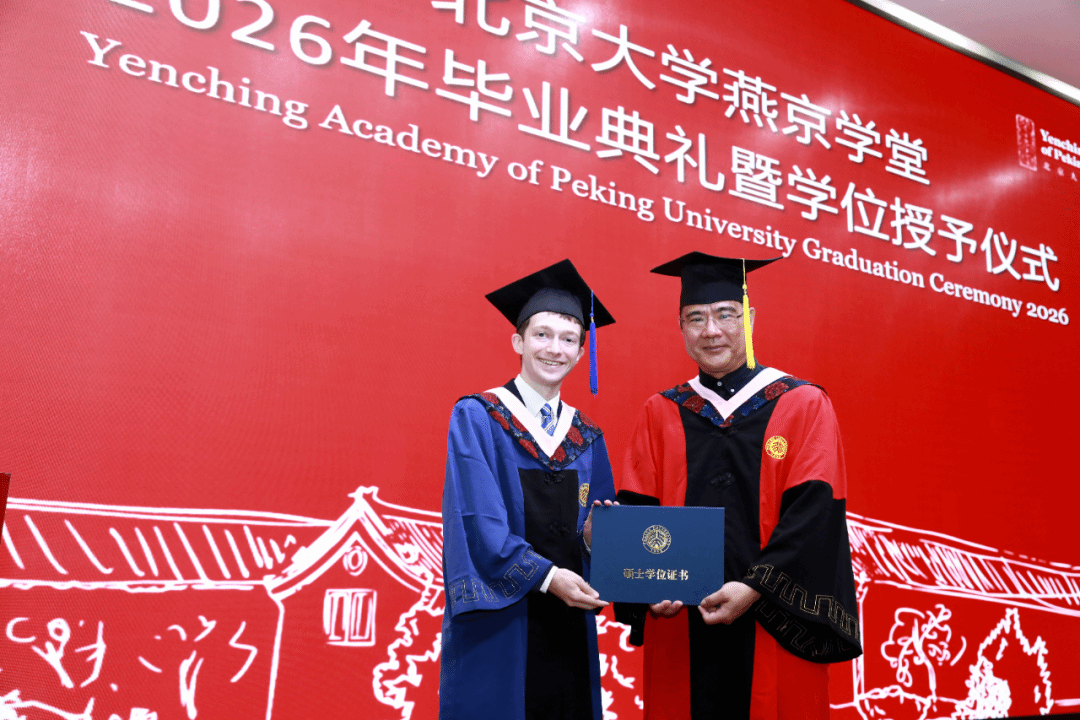
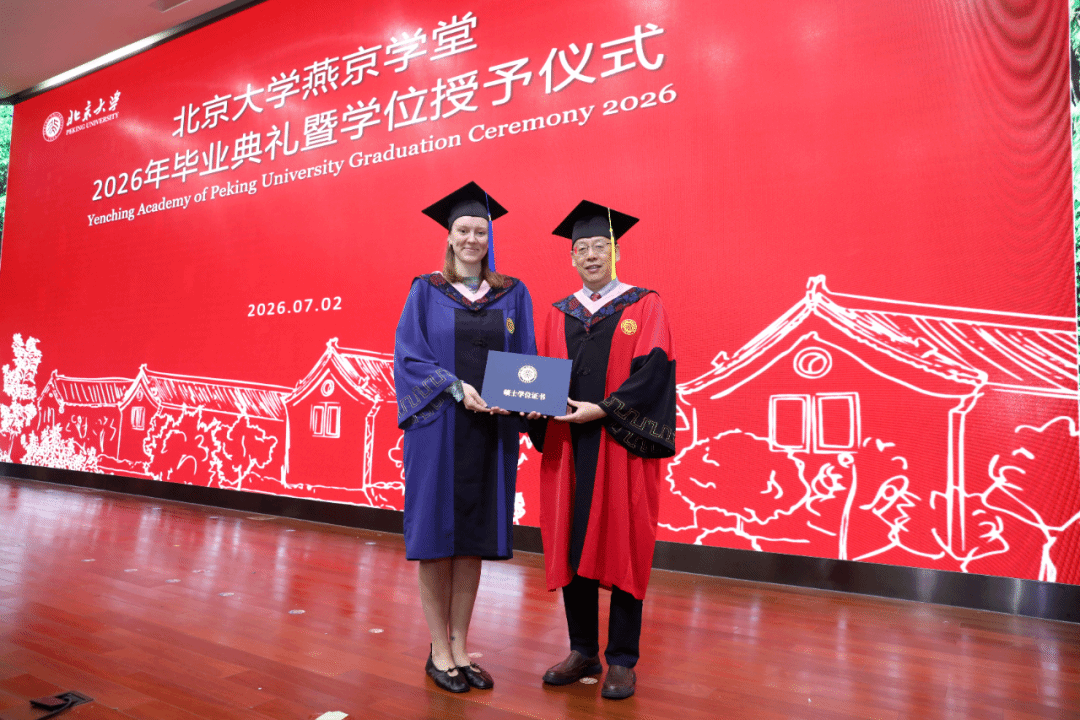
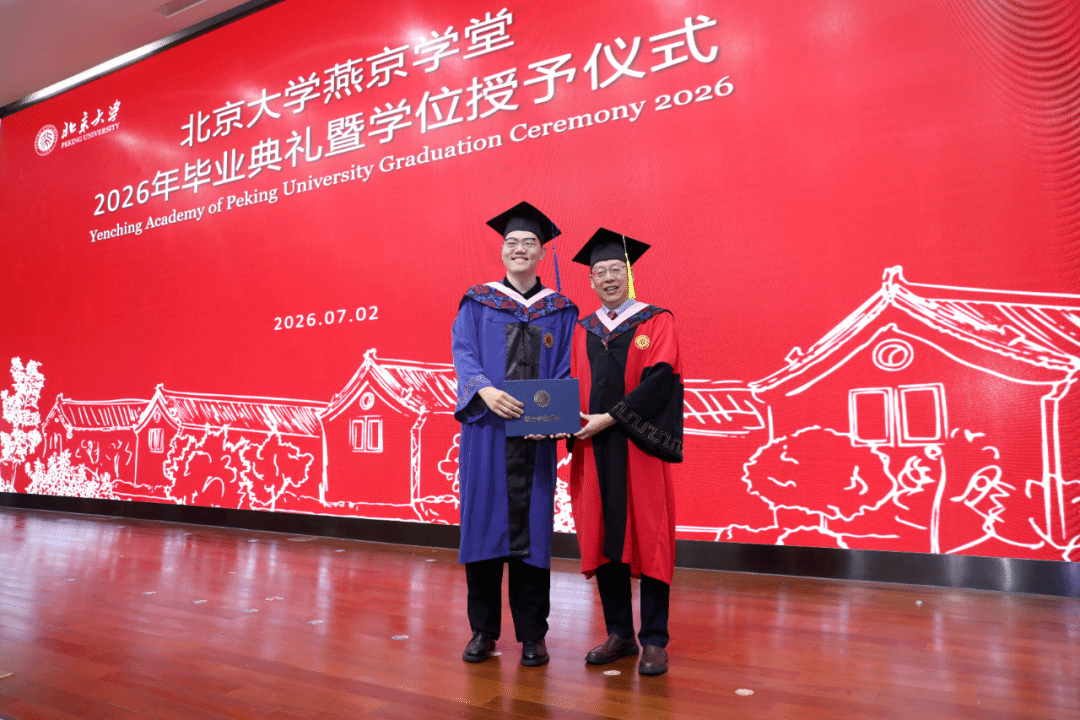
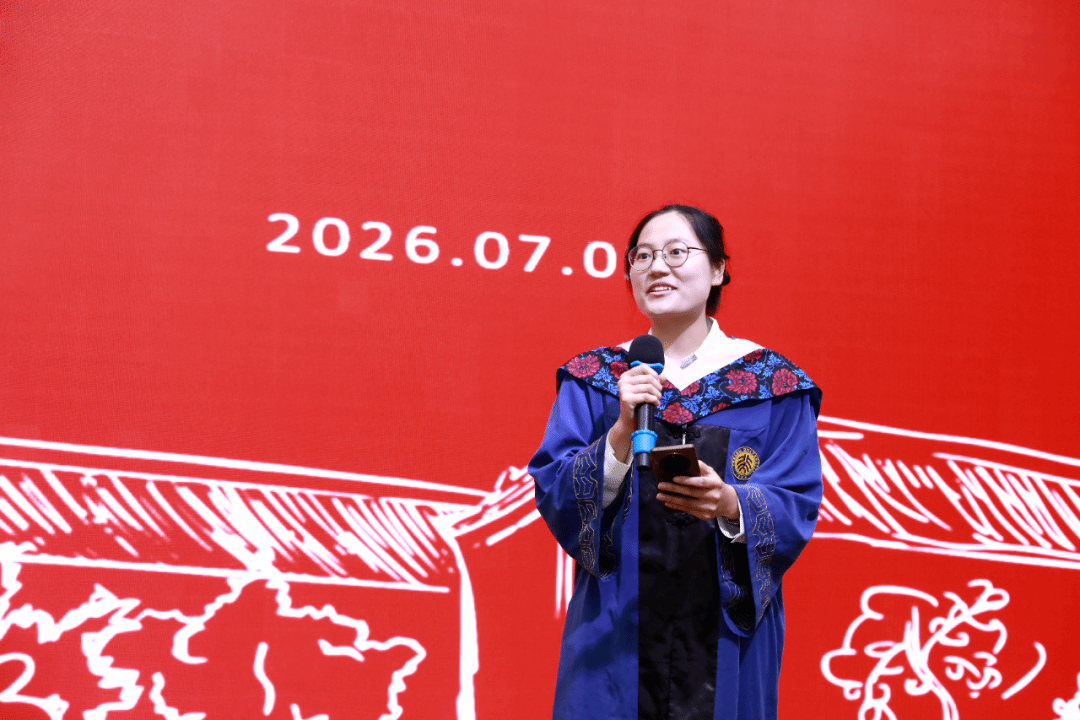
At the end of the ceremony, Zhang Yushu (China) of the Class of 2026 performed a stand-up comedy set, recounting the cultural shock, language-learning anecdotes, and camaraderie she experienced at YCA with whimsy and warmth.
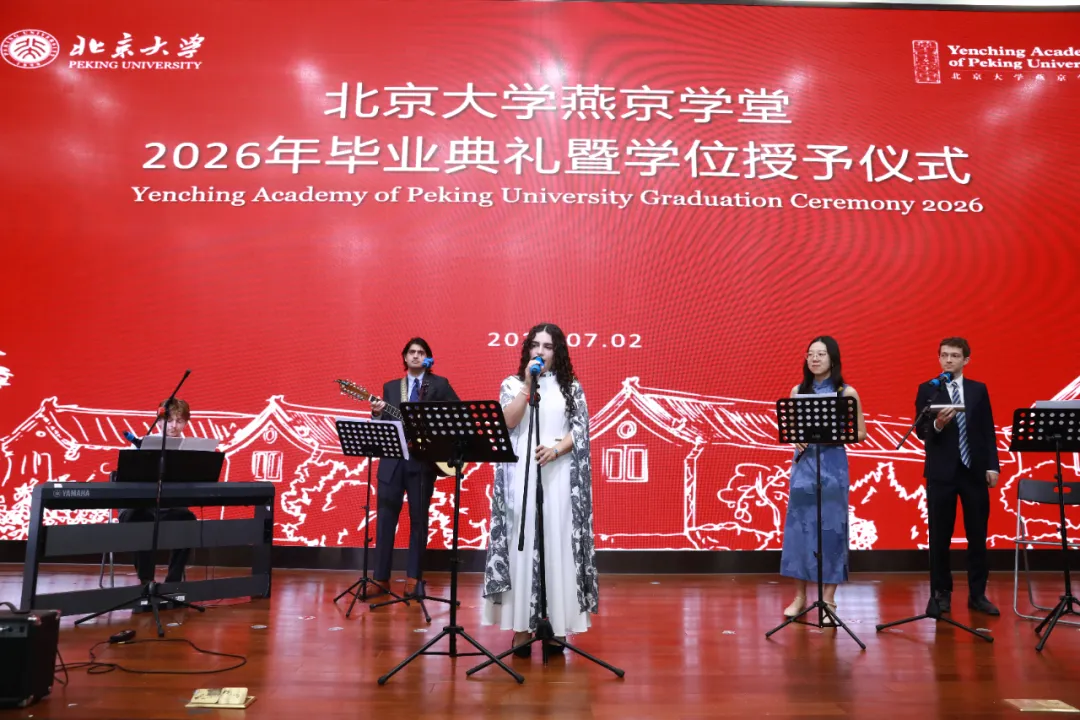
The event came to a climax with the live performances of “Nine Million Bicycles”, “Wings”, and “Zaijian” (“Goodbye”) from the YCA Scholar band featuring Nino Nadirashvili (Georgia), Luca Bustani Wood (UK), Wang Shidi (China), Andrew Rule (USA), and Abdul Haey-ee Asim (USA).
I’m afraid there’s no chance to say goodbye before I leave
’Cause I might’ve no chance to see you again
Tomorrow, I part with you and this place dear to me
Tears, my tears, stream down my face
I will remember your face forever; I will cherish the memories you gave me
These days will never be erased from my heart
They’ll never leave me, not for a single day
I cannot promise to come back some day
I just go on and on, not looking back
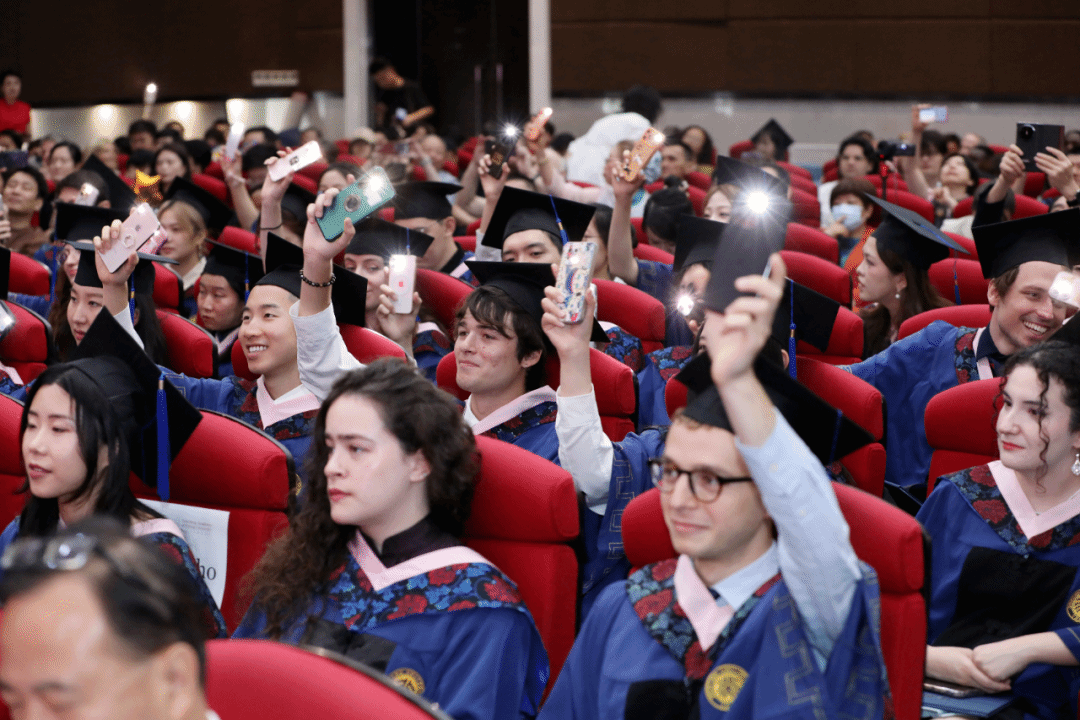
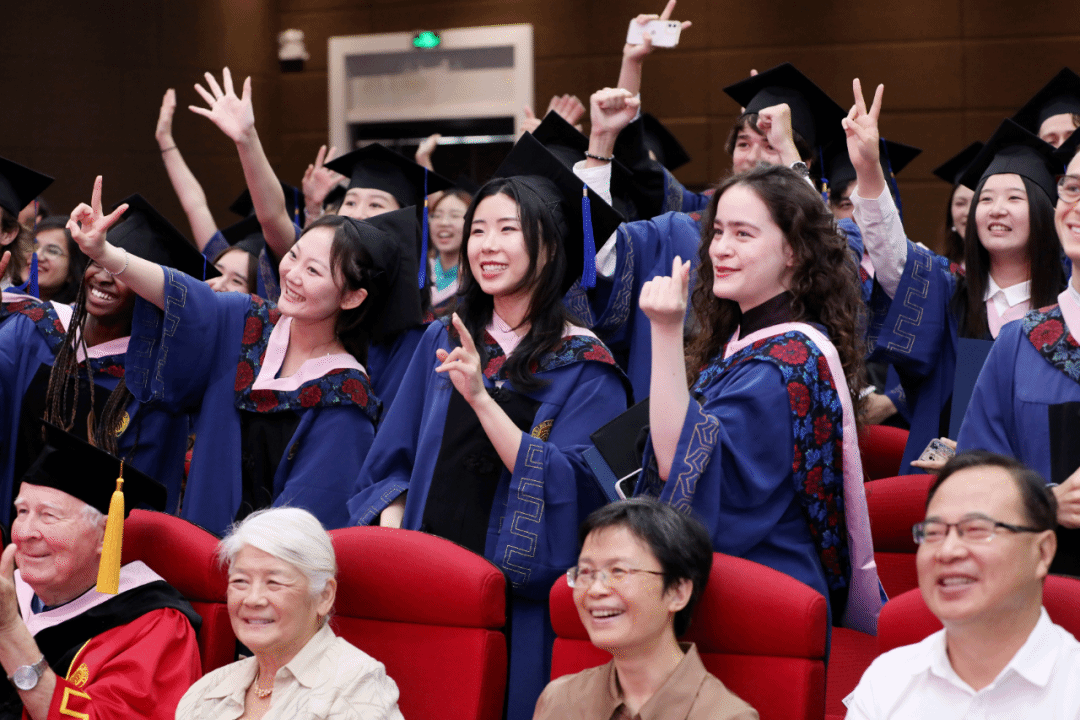
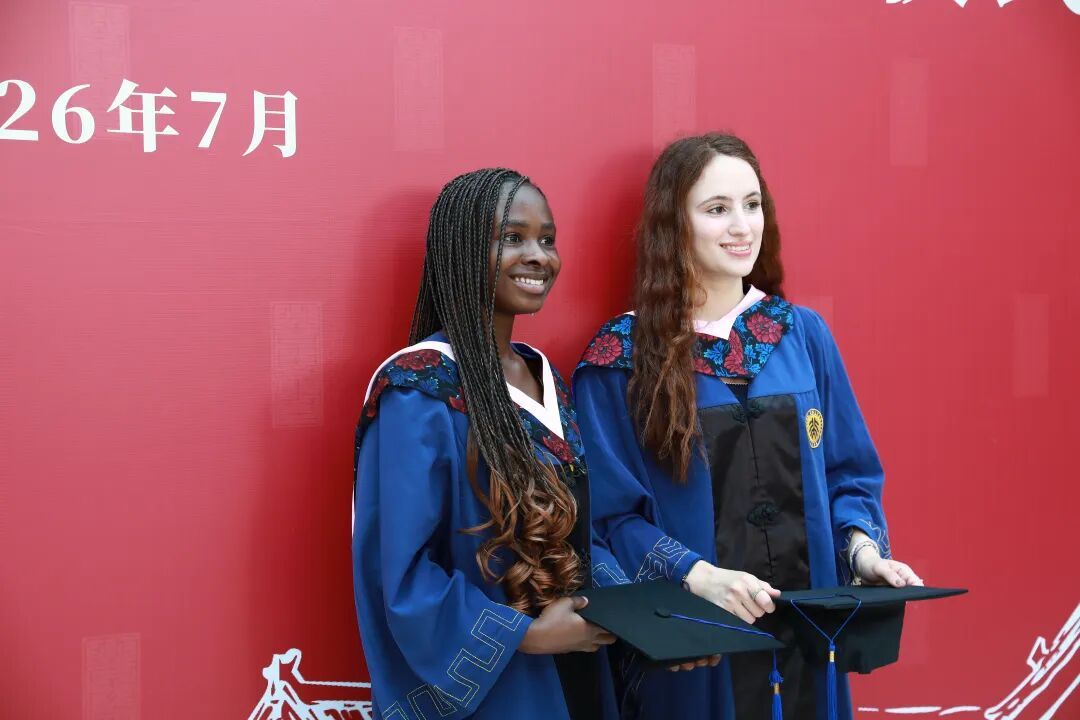
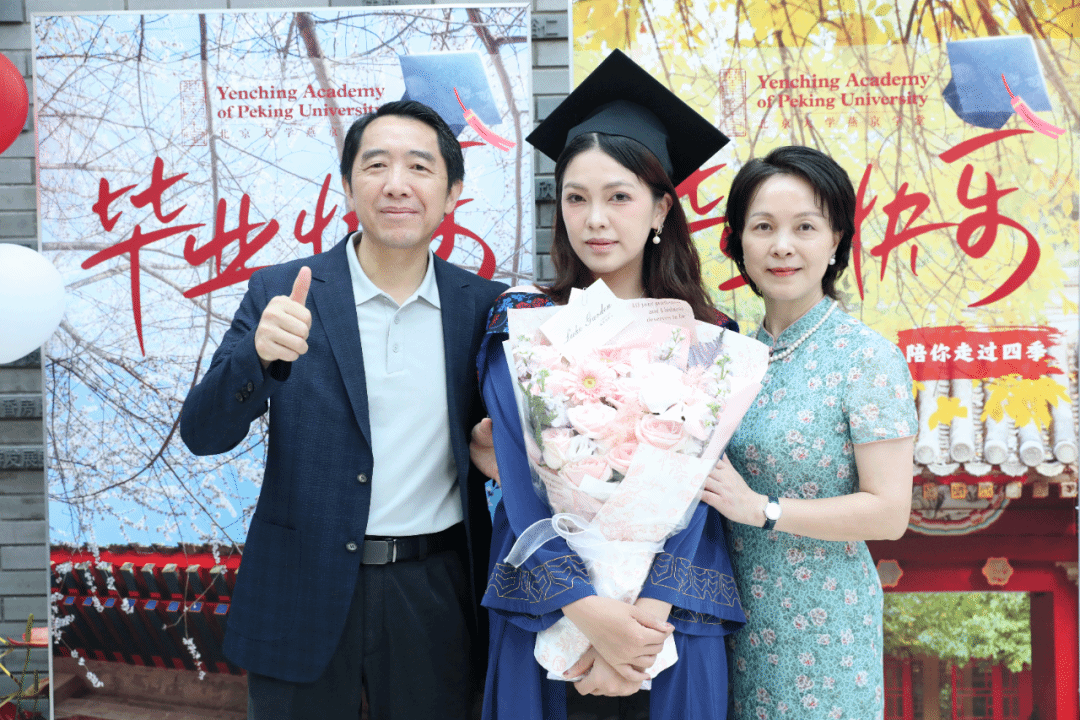
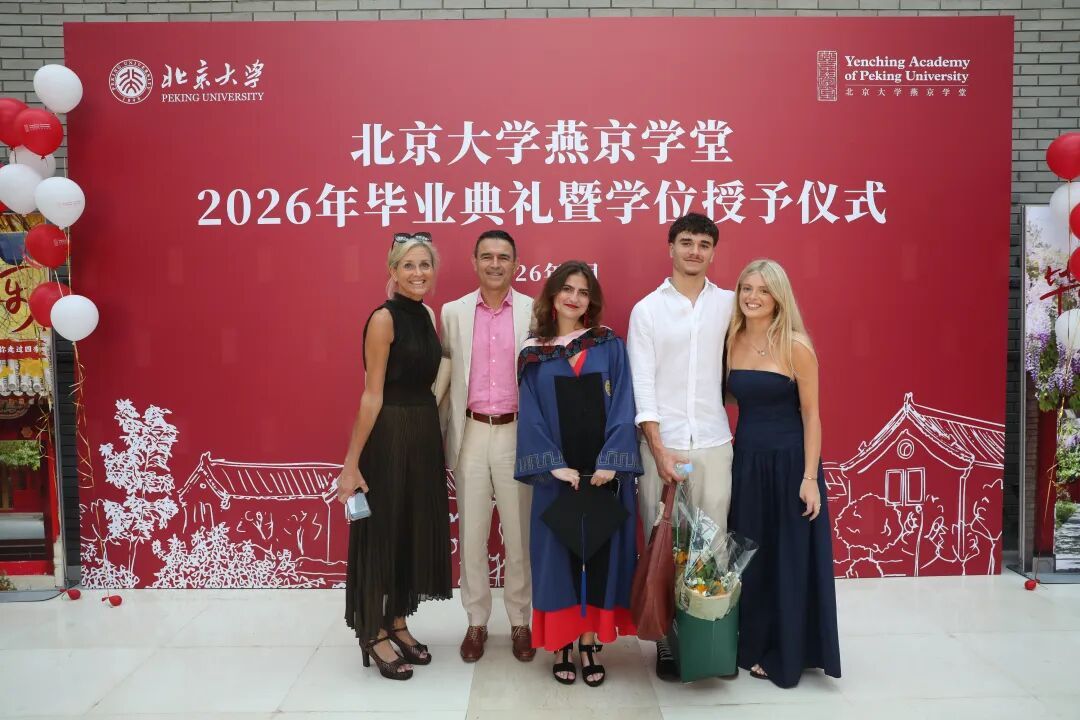
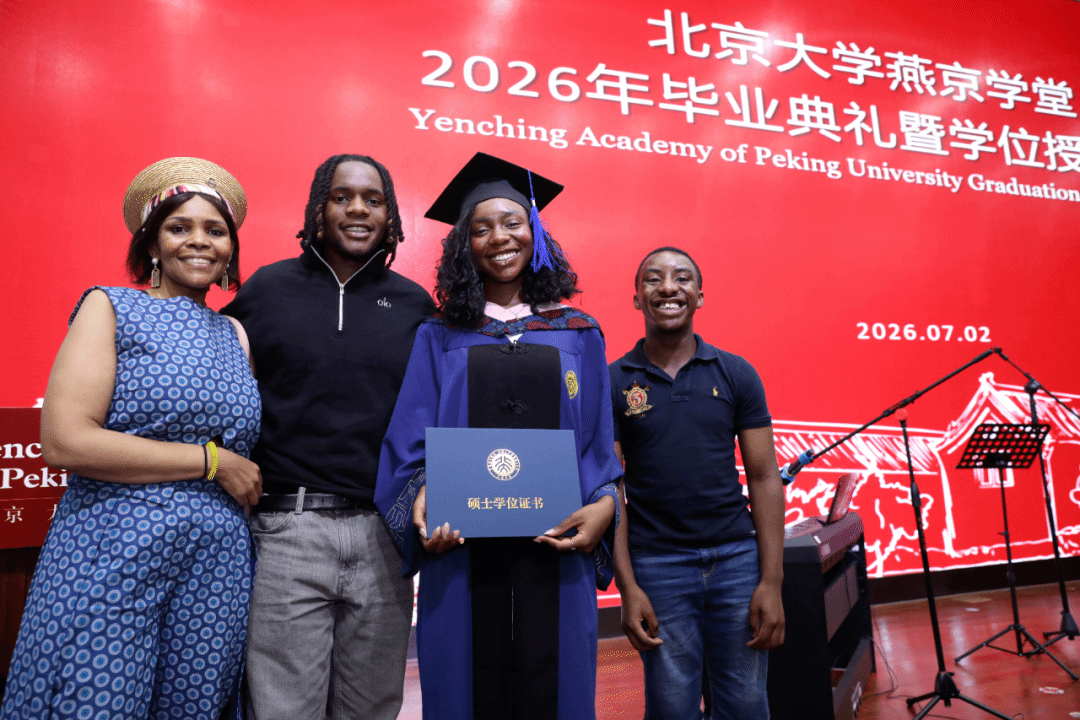
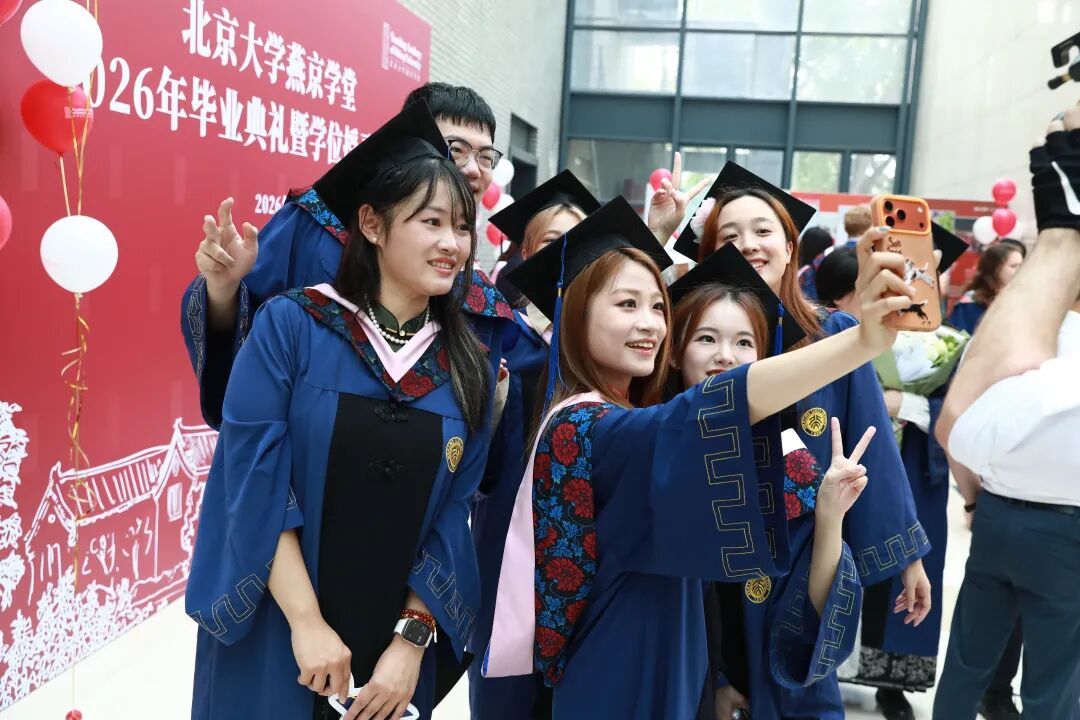
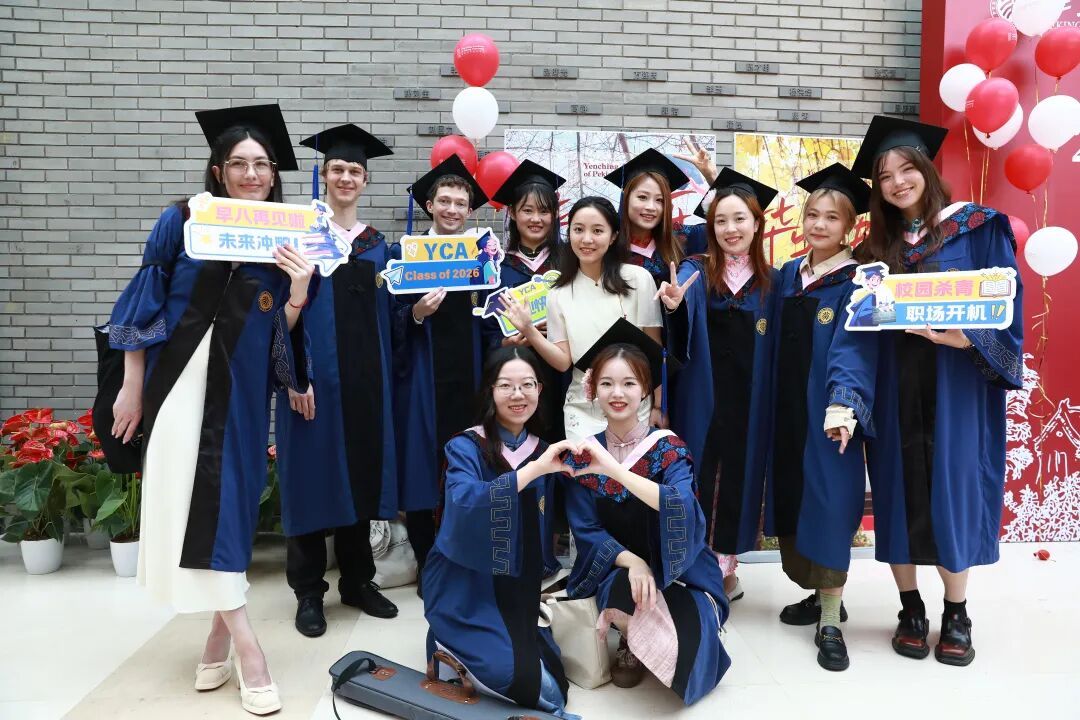
The graduation ceremony drew to an end as the melodies faded. We hugged. We took photos. We said goodbye. Everyone tried to savor the moment for as long as possible. From here, the graduates will sail off from the campus into the vast expanse of life. May every member of the Class of 2026 brave the waves and succeed. May they continue to bring along friendship and scholarship and meet someday in a near future.
Class of 2026, may you embark on a journey seeking what you love—over mountains and across seas—to become the best of who you are.
Guests in attendance:
Yuan Ming, Honorary Dean of Yenching Academy
Roger Thomas Ames, Humanities Chair Professor at Peking University and Professor Emeritus of Philosophy at University of Hawaii at Manoa
Dong Qiang, Dean of Yenching Academy
Dong Xiaohua, Party Secretary of the Directly Affiliated Units of Peking University
Liu Qian, Founder and CEO, Wusawa Advisory, Inc., former Managing Director of The Economist Group in Greater China
Wang Yong, Professor at School of International Studies, Peking University
Yang Ming, Professor at School of Law, Peking University
Yang Po, Associate Professor at Graduate School of Education, Peking University
Xie Kankan, Associate Professor at School of Foreign Languages, Peking University
Zhang Jianwei, Associate Professor at School of Archaeology and Museology, Peking University
Duan Shouliang, Executive Vice President of Kezhu Property
Sheng Wei, Executive Vice President, Peking University Shaoyuan and Zhongguanyuan Global Village PKU
Bian Fangjun, Vice President, Peking University Shaoyuan and Zhongguanyuan Global Village PKU
Ji Wei, Director of 6th Management Division, Kezhu Property
Fan Shiming, Associate Dean of Yenching Academy
Brent Haas, Associate Dean of Yenching Academy
Lu Yang, Director of Graduate Studies, Yenching Academy
Chen Changwei, Assistant Dean of Yenching Academy
Yang Feng, Assistant Professor at Yenching Academy and Guanghua Management School, Peking University
Pi Anli, Li Jing, Liu Jianhua, Yang Haiyan & Zhao Huixian, Rooms Divisions, Peking University Shaoyuan
Wang Miaoyi, Wei Haiwei, Ni Bingke & Li Xiang, Kezhu Property