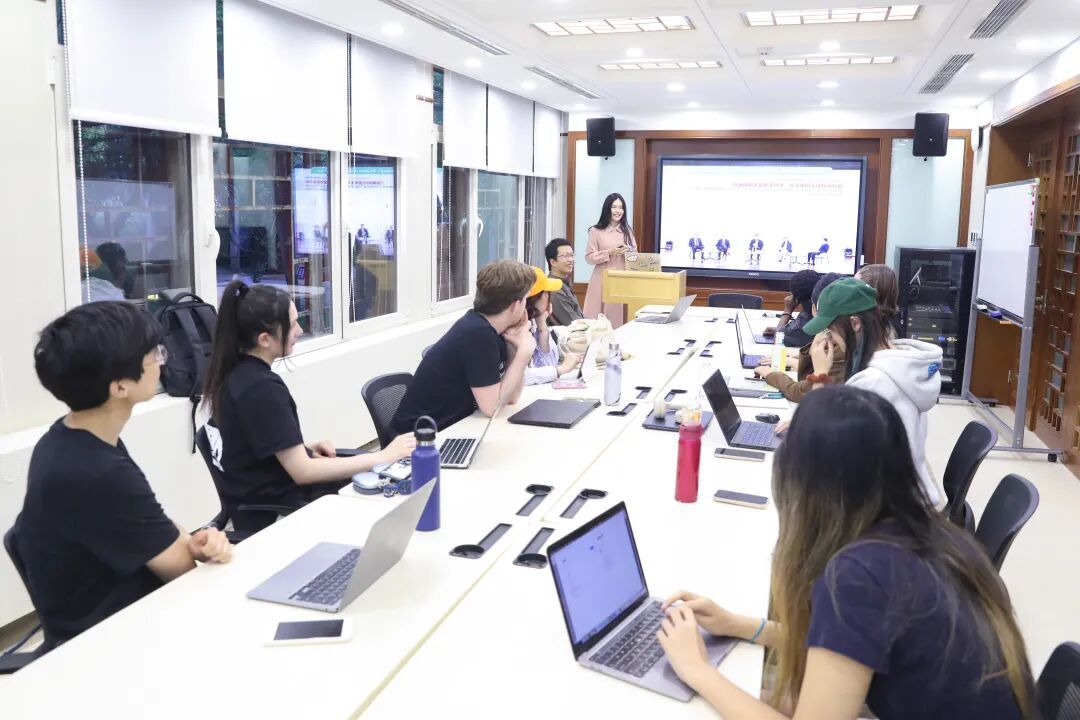
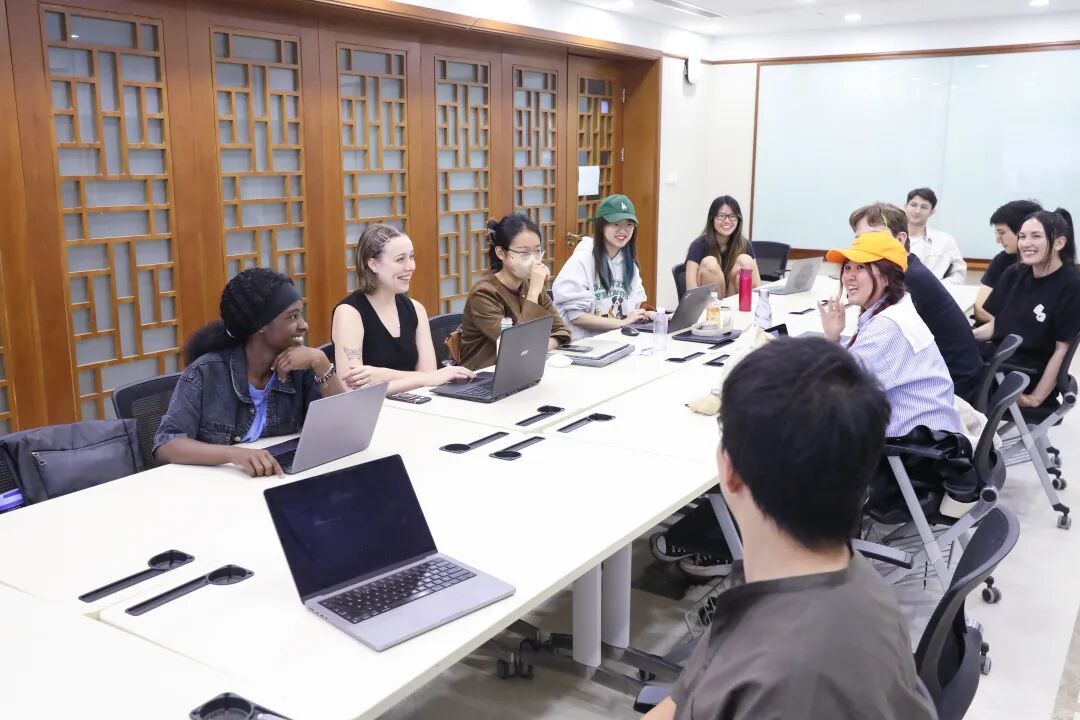
In a Jingyuan Courtyard 4 classroom, one might find students from around the world sitting in a circle, guided by instructor Xie Kankan as they push past the boundaries of conventional thinking. Whenever a student stopped at the surface level of “what is,” Professor Xie would cut straight to the point with a blunt “So what?” to urge the students to dig into the essence of the problem and forge instead a questioning mindset, especially given this cross-cultural context.
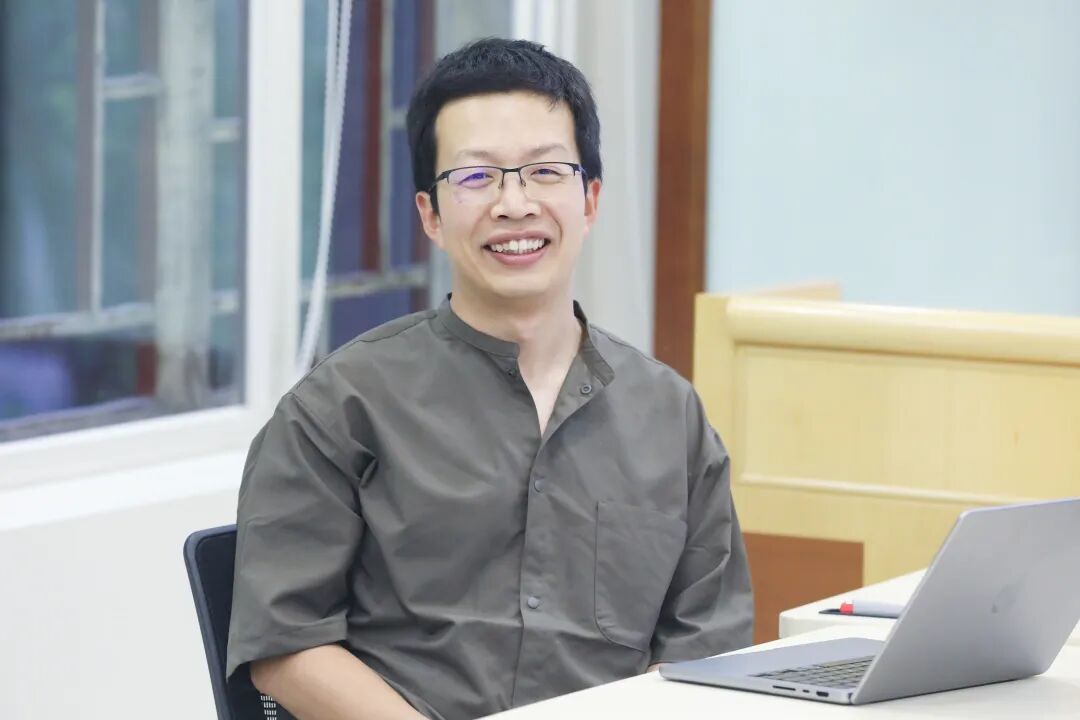
Xie Kankan is an Associate Professor of Southeast Asian Studies at the School of Foreign Languages at Peking University and teaches Critical Thinking and Academic Writing at Yenching Academy. Drawing on multiple scholarly traditions, Professor Xie has fostered a collaborative community of scholars through this course. According to students, this course does not pose a research question, but rather equips them to conduct high-quality academic research—from precise questioning to effective expression—as cultural translators with critical empathy.
A Dialogue with Xie Kankan
Q: This course is about academic writing. Which part in academic writing, from research questions, literature review, to methodology do you think is the most challenging for students? And how do you lead your students from different cultural backgrounds and research tracks to engage equally in academic writing practice?
A: In my classroom, I encourage the students to develop a questioning mindset and pose clear and worthwhile research questions. However, for most of the students, defining the research subject is not the problem; it’s more challenging work for them to dig into the essence of the research subject and express it clearly. The reasons vary: A student who is new to the research topic may not know how to pose the question effectively or write in an academic way; the student can benefit from sharing preliminary ideas and inviting fellow students to brainstorm together so as to identify a feasible research direction from multiple perspectives. In contrast, a student may know the research topic well or be overly absorbed in a specific field; in this case, the class needs to help the student step back to avoid excessive jargon and monologue. Academic writing strives to present ideas in a concise way and to explore the broader scholarly significance of a given research topic. For either case, I emphasize the significance of “effective expression,” because in both oral communication and academic writing the sender needs to find an effective way to resonate with the receiver.
Q: “Critical thinking” is traditionally regarded as a methodology. But in this course, you foster it as “a mental habit.” What should we do to foster students’ questioning mindset and critical thinking in an era of globalization and information explosion?
A: You’re right. The rapid development of information technology has caused drastic changes in the form, content, and aims of higher education. In the era of information overload, information deficit is no longer the concern, but rather false and misleading information becomes an increasingly serious challenge. The Yenching Scholars are from so many different cultural backgrounds and global perspectives, and already have excellent information-gathering skills; thus, we could skip this part of the training. On the other hand, the course emphasizes critical thinking and help students enhance their capacity to process information across multiple dimensions and to sift out falsehoods. For instance, I would encourage students to challenge fixed mindsets and analyze what they’ve taken for granted in a cross-cultural context so that they can examine their habitual assumptions and interpretive frameworks through a scholarly lens. We also conduct critical analysis of diverse “narratives” in class. We try to find the author’s purpose by reading “along the grain,” and reading “against the grain”; we also reflect on why the author has to write this way and not another.
Q: “Writing is a practice of academic empathy.” When you give instruction in English writing, how do you guide students to make a cross-tradition shift between their native language and English to understand and adapt to the invisible rules of English academic writing?
A: Yenching Scholars have an excellent command of English, and many students in my class are native speakers. In the first class, I would point that the course does not aim to “teach English.” It aims to train students to organize their thinking and express academically in a cross-cultural context. Many Asian students have a strong sense of uncertainty surrounding the topics they work on. As a result, they devote too much space to the research background, assuming that the more extensive the research background, the more clearly defined the research question. Ironically, however, an unduly prolonged opening may obscure the core argument. In this case, I would recommend a thesis-first opening. On the contrary, some native English-speaking students tend to let loose and deliver Western allusions haphazardly, assuming that such Western allusions can be understood without explanation. In this case, I would advise students to “self-interpret” and render their writing more accessible to readers, particularly those from other cultural backgrounds.
Q: Our Scholars find that they have reconstructed a new understanding of their own cultures thanks to your academic writing class. What do you do to guide the students to reexamine their own cultures through writing?
A: A beginner in cultural anthropology would come across the concept of ethnocentrism, which refers to the tendency to judge another ethnic group’s culture and behaviors by using one’s own culture, values, beliefs, and customs as the standard. Ethnocentrism seems to be natural in everyday life, but in cultural research scholarship, we must critically reflect on the ethnocentric mindset; otherwise, we may unwittingly slip into cultural discrimination. In my writing class, I guide the students to build a framework for comparative analysis, and interpret seemingly unrelated symptoms and issues within a cross-cultural context. Usually, students can easily build a comparative framework based on their experience with China and on their own cultures, and they can sometimes use the academic theories they have learnt to make further analysis; however, this is far from enough. Students must reflect on their own subjectivity or the subjectivity of the group they belong to. As researchers, it is important to acknowledge the positionality of the researcher to the research subject so as to find proper ways of interpretation by exploring different perspectives.
Q: You have long engaged in archival research and fieldwork in Southeast Asia, Western Europe, and North America. Is this because of your mentors’ influence? Over the years, you have worked closely with your mentors; what scholarly principle of theirs has made the deepest impression on you? And as a thesis supervisor today, do you use the same scholarly principles in your work? Is there any sort of cross-generation methodology?
A: For this academic writing course, I have drawn inspirations from my past experiences, such as a Southeast Asian history writing course at Cornell, the University of California’s PhD dissertation seminars, and the academic writing course at PKU School of Foreign Languages, to my experience with gotong-royong (community mutual aid) in rural Sulawesi, Indonesia. Evidently, these experiences are markedly different, but they all point to the same thing—the importance of community. Many think that writing is a very personal thing and assume that profound thought, particularly in the humanities, can only be achieved through solitary study. But when I studied and worked overseas, I came to see that academic writing is a practice that cannot stand alone; it needs a community, which can be large as a worldwide network of scholars or small as a study group of several fellow students. Communities play a crucial role in academic writing—I don’t think work in isolation is the correct way to proceed with academic writing. I have reiterated in my class the importance of communication, sharing, and mutual aid for academic writing.
Q: You have delved deeply into area studies. What are the strengths of this discipline? Given the resurgence of nationalism, what should area studies scholars do as cultural translators?
A: I think area studies scholars’ main strength lies in their empathy for others. The solid language skills and immersive experience of living and studying in a local culture enable an area studies scholar to acquire and use local knowledge. And compared with their ivory-tower counterparts, area studies scholars tend to be more culturally sensitive. This aligns with Yenching Academy’s mission. In the face of the resurgence of nationalism and populism, accompanied by intensifying deglobalization, it is admirable that young students are willing to leave their cultural comfort zone and embrace uncertainty. I think both Yenching Scholars and area studies scholars need to embrace stronger grounding and keep reflecting on their relationship to society, the state, and the world at large. What cultural translators need to do is not only on the level of language and communication: Cultural translators must use their cultural sensitivity and capacity for empathy to critically think about and interpret the world we are living in. I hope that the Critical Thinking and Academic Writing course would contribute to this in some way.
Voices from Yenching Scholars
Camille Thompson (USA, 2023 Cohort): Professor Xie Kankan is one of our favorite teachers. He expresses great interest in all of our research topics. His feedback is detailed, to the point, and helps us dig deeper. I took his Critical Thinking and Academic Writing class last year. This course teaches us how to make a better plan for and complete our master’s thesis proposal.
My dissertation topic gradually came into focus during this course. Every time I felt stuck or confused during my research, I would go talk to Professor Xie and he could always clear up my confusion.
Collin Chung (USA, 2023 Cohort): When I was at Yenching Academy, I benefited most from Professor Xie Kankan’s Critical Thinking and Academic Writing course. Prof. Xie read and commented on every essay carefully. He guided us to see issues from different perspectives, helping us form more focused arguments and construct well-reasoned logic. I could always get fresh inspiration for my research in this class, which helped greatly when I designed the fieldwork plan for my dissertation.
Melania El Khayat (Italy, 2023 Cohort): Critical Thinking and Academic Writing provided important methodological support for my dissertation. In the beginning of the semester, my research remained focused on more common topics like soft power. But through the in-class training of critical thinking, I shifted to and completed a study on Red Note’s role in diplomatic practice.
For instance, it was during the class session about literature review that I discovered a gap in the existing literature that there is yet to be research on everyday digital diplomacy. And the methodological framework I learnt on this course enabled me to integrate discourse analysis and the study of diplomacy. Most importantly, through the peer review in the course seminars, I learned to be open to constructive suggestions. When I was working on my dissertation, I naturally used the rigorous method of revision I learnt on this course. We had no specific research topics for this course, but it enabled me to build up a toolkit for rigorous scholarship.
This course has benefited me most among other courses I took during my time at the Academy. Professor Xie Kankan could always grasp what I was trying to say remarkably well, even before I myself figured it out.
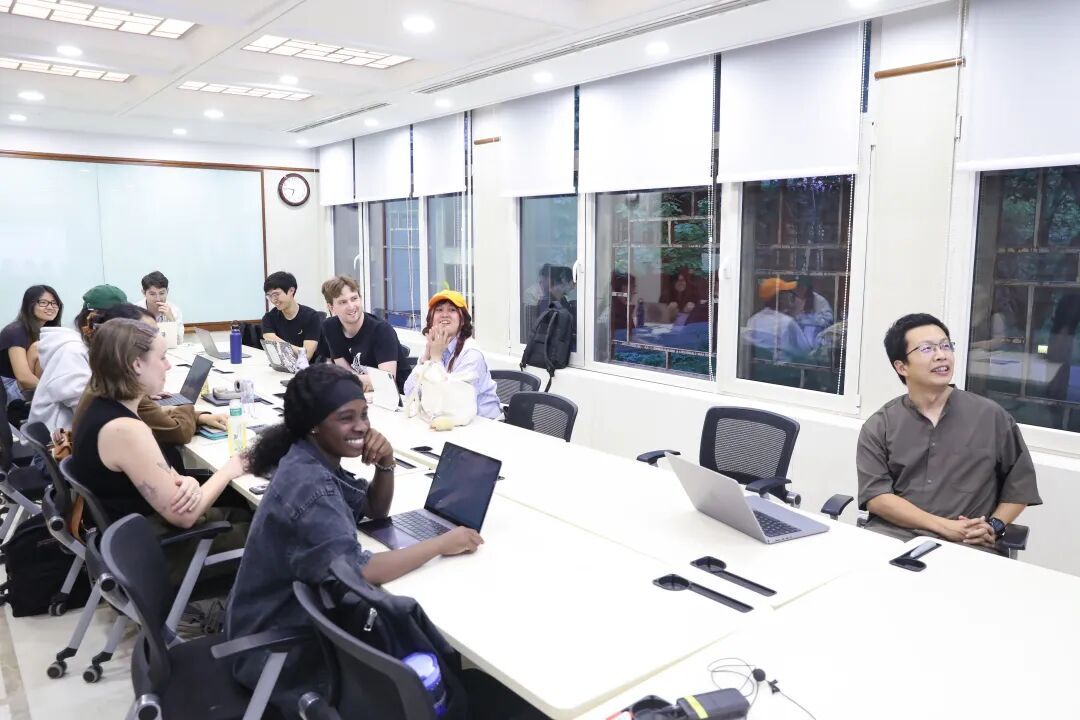
Prof. Xie Kankan’s Critical Thinking and Academic Writing course aims to foster students’ capacity of innovative research in China Studies and enhance their academic writing. The course is not limited to literature review; instead, it guides students to focus on original research and translate their preliminary ideas into complete research projects. Throughout the course, the instructor guides students to define their desired research topic, formulate a concise research question, assists them in gathering literature and primary materials, helps them select appropriate research methods, and supports them in composing high-quality research proposals.